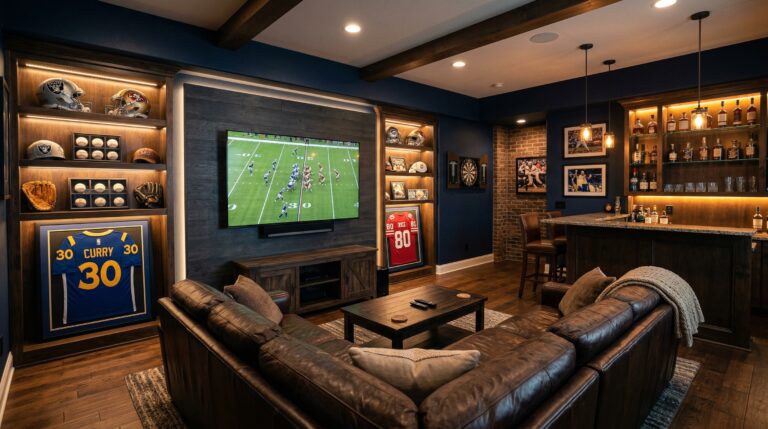
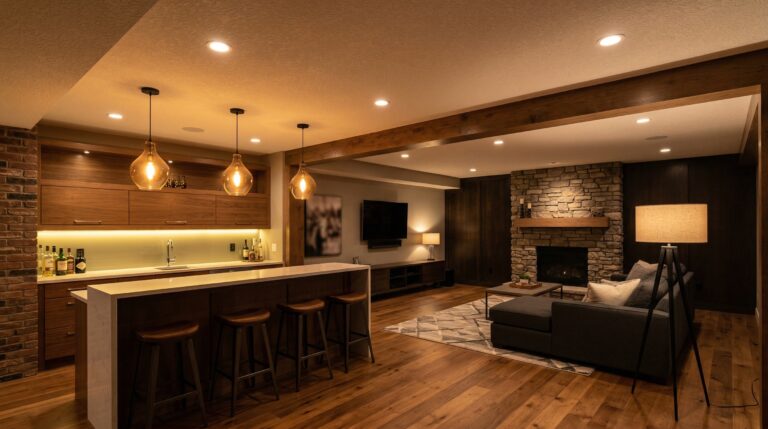
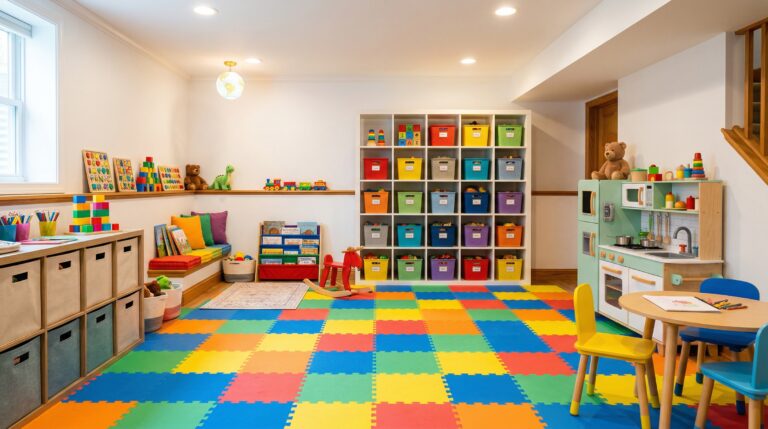
Your basement ceiling might be the most underestimated surface in your home. It’s the first thing that makes a basement feel like a basement — exposed joists, dangling wires, ductwork snaking in every direction. But the right ceiling treatment transforms the entire space from “underground storage” to “favorite room in the house.”
We’ve finished 500+ basements across Utah over 20+ years, and the ceiling decision comes up on every single project. Here’s everything we’ve learned about what works, what doesn’t, and what will make your basement ceiling look (and function) its best.
- 11. Standard Drywall Ceiling
- 22. Drop Ceiling (Suspended Ceiling)
- 33. Painted Exposed Ceiling
- 44. Coffered Ceiling
- 55. Tongue and Groove Wood Planks
- 66. Beadboard Ceiling
- 77. Shiplap Ceiling
- 88. Tray Ceiling
- 99. Corrugated Metal Ceiling
- 1010. Faux Wood Beams
- 1111. Fabric/Stretched Ceiling
- 1212. PVC/Vinyl Ceiling Tiles
- 1313. Tin/Metal Ceiling Tiles
- 1414. Acoustic Ceiling Panels
- 1515. Plywood Panel Ceiling
- 1616. Ceiling with Built-In Lighting Coves
- 1717. Barrel Vault Ceiling
- 1818. Reclaimed Wood Ceiling
- 1919. Painted Drywall with Crown Molding
- 2020. Cloud Ceiling Panels
- 2121. Painted Ceiling with Exposed Beams
- 2222. Two-Tone Ceiling
- 2323. Ceiling Wallpaper or Murals
- 2424. LED Panel Ceiling
- 2525. Hybrid Ceiling
- 26How to Choose the Right Basement Ceiling
- 27Ready to Pick Your Ceiling?
1. Standard Drywall Ceiling
The gold standard. Drywall gives your basement ceiling the same clean, seamless look as every other room in your house. It’s the most popular choice for good reason.
Best for: Basements with 8+ foot ceilings and accessible plumbing/electrical above
Cost: $3-$6 per square foot installed
Pros:
– Seamless, polished appearance
– Paintable in any color
– Excellent sound dampening
– Increases home value the most
Cons:
– Requires cutting access panels for plumbing/electrical
– Not ideal if you need frequent access to utilities above
– Takes more time to install than drop ceiling
Pro Tip: If you have plumbing above the ceiling that might need future access, we install removable access panels that blend seamlessly into the drywall. You’d never know they’re there until you need them.
2. Drop Ceiling (Suspended Ceiling)
The classic basement ceiling — a grid system with removable tiles. It gets a bad reputation for looking “basement-y,” but modern drop ceiling tiles have come a long way.
Best for: Basements where access to plumbing, electrical, and ductwork is essential
Cost: $2-$5 per square foot
Pros:
– Easy access to everything above
– Hides ugly mechanicals completely
– Individual tiles can be replaced if damaged
– Can incorporate recessed lighting
Cons:
– Reduces ceiling height by 3-6 inches
– Can look institutional if you use basic tiles
– Lower perceived value than drywall
Pro Tip: Skip the standard 2×4 tiles. Use 2×2 tiles for a more modern look, or upgrade to designer tiles with coffered or textured patterns. The grid system is the same — the tiles make the difference.
3. Painted Exposed Ceiling
Strip everything bare — joists, ductwork, pipes, wires — and paint it all one color. Usually black or dark charcoal, but white works in some spaces too.
Best for: Industrial/modern aesthetics, low-ceiling basements where every inch counts, entertainment spaces
Cost: $1-$3 per square foot (paint + labor)
Pros:
– Zero ceiling height loss
– Trendy industrial/loft look
– Budget-friendly
– Full access to utilities anytime
Cons:
– Exposed wires and pipes must still be code-compliant
– No sound insulation
– Dust settles on exposed surfaces
– Not for everyone aesthetically
Pro Tip: The key to making a painted exposed ceiling look intentional (not unfinished) is consistency. Every surface gets painted — joists, pipes, ducts, wires, subfloor. Use a paint sprayer for even coverage. One missed pipe ruins the whole effect.
4. Coffered Ceiling
A grid of recessed panels created with beams (real or decorative). Coffered ceilings add architectural depth and a high-end feel.
Best for: Formal entertainment spaces, home theaters, upscale basements with 9+ foot ceilings
Cost: $15-$30 per square foot
Pros:
– Dramatic visual impact
– High-end, custom appearance
– Can incorporate lighting in the coffers
– Adds perceived ceiling height
Cons:
– Requires adequate ceiling height (9+ feet recommended)
– More expensive than other options
– Longer installation time
5. Tongue and Groove Wood Planks
Real or engineered wood planks installed across the ceiling. Creates a warm, cabin-like feel that’s hugely popular in Utah homes.
Best for: Family rooms, bedrooms, entertainment areas — especially in mountain-adjacent homes
Cost: $5-$12 per square foot
Pros:
– Warm, natural aesthetic
– Hides imperfections in the ceiling plane
– Works with rustic, modern farmhouse, and traditional styles
– Excellent sound dampening
Cons:
– Requires furring strips or a flat surface to install against
– Can darken a space if using deep wood tones
– Reduces ceiling height slightly (1-2 inches)
Pro Tip: For Utah basements, we love using beetle-kill pine — it’s locally sourced, sustainable, and the blue-gray streaks add character you can’t fake. It’s a conversation starter every time.
6. Beadboard Ceiling
Similar to tongue and groove but with a distinctive beaded profile. Classic Americana that works surprisingly well in basements.
Best for: Cottage, traditional, and farmhouse-style basements
Cost: $4-$8 per square foot
Pros:
– Clean, classic look
– Lighter feel than solid wood planks
– Easy to paint for different moods
– Good for lower ceilings (minimal height loss)
Cons:
– Can feel dated if not executed well
– Grooves collect dust over time
7. Shiplap Ceiling
Flat boards with a reveal between each plank. The modern farmhouse staple works beautifully overhead.
Best for: Modern farmhouse, transitional, and contemporary spaces
Cost: $5-$10 per square foot
Pros:
– Clean horizontal lines
– Bright, open feel (especially painted white)
– On-trend and photographable
– Works in any room type
Cons:
– Slightly higher cost than basic drywall
– Requires flat surface or furring strips
8. Tray Ceiling
A recessed center section that creates the illusion of higher ceilings. The “tray” can be subtle (a few inches) or dramatic (a foot or more).
Best for: Living rooms, bedrooms, and entertainment spaces with 8.5+ foot ceilings
Cost: $8-$20 per square foot
Pros:
– Makes ceilings appear higher
– Creates visual interest without clutter
– Perfect for rope lighting or LED strips
– Adds architectural detail
Cons:
– Needs adequate starting height
– Ductwork routing must accommodate the tray shape
Pro Tip: LED strip lighting around the tray perimeter creates an ambient glow that makes the ceiling feel like it floats. This is one of the highest-impact, lowest-cost upgrades we install.
9. Corrugated Metal Ceiling
Galvanized or rusted corrugated metal panels mounted to the ceiling. Industrial, bold, and surprisingly practical.
Best for: Man caves, workshops, rustic entertainment spaces, home bars
Cost: $3-$7 per square foot
Pros:
– Unique, eye-catching look
– Durable and easy to clean
– Reflects light well
– Pairs with exposed wood beams
Cons:
– Can be loud (metal amplifies sound)
– Not appropriate for every aesthetic
– Needs proper framing behind it
10. Faux Wood Beams
Lightweight, hollow beams that create the look of exposed structural timber without the weight or cost.
Best for: Adding visual warmth and architectural interest to any ceiling style
Cost: $8-$20 per linear foot
Pros:
– Dramatic visual impact
– Lightweight — no structural concerns
– Available in many species and stain colors
– Can hide electrical runs inside the hollow beam
Cons:
– Reduce effective ceiling height by beam depth
– Require 9+ foot ceilings to look proportional
11. Fabric/Stretched Ceiling
A fabric membrane stretched across a perimeter track system. Creates a perfectly smooth, uniform surface.
Best for: Home theaters, modern spaces, creative/artistic rooms
Cost: $10-$25 per square foot
Pros:
– Perfectly smooth surface — no seams or texture
– Excellent acoustics
– Can be backlit for dramatic effect
– Available in hundreds of colors and finishes
Cons:
– Higher cost than most options
– Professional installation required
– Can be damaged by sharp objects
12. PVC/Vinyl Ceiling Tiles
Moisture-proof tiles that install in a drop ceiling grid or direct-mount. Available in decorative patterns that mimic tin, wood, and more.
Best for: Basements with moisture concerns, bathrooms, laundry areas
Cost: $3-$8 per square foot
Pros:
– Completely moisture-proof
– Easy to clean
– Decorative patterns available
– DIY-friendly installation
Cons:
– Can look artificial up close
– Less sound dampening than drywall
13. Tin/Metal Ceiling Tiles
Pressed metal tiles with ornate patterns. Victorian-era charm that’s been making a comeback.
Best for: Home bars, vintage-inspired spaces, eclectic design
Cost: $5-$15 per square foot
Pros:
– Unique, ornate appearance
– Extremely durable
– Fire-resistant
– Historic character
Cons:
– Can amplify sound
– Higher cost for real tin
– Professional installation recommended for best results
14. Acoustic Ceiling Panels
Fabric-wrapped or foam panels designed specifically for sound absorption. Essential for dedicated music rooms, theaters, and recording spaces.
Best for: Home theaters, music rooms, podcast studios, offices
Cost: $5-$15 per square foot
Pros:
– Superior sound control
– Available in custom colors and sizes
– Can be combined with other ceiling types
– Dramatically improves room acoustics
Cons:
– Functional look that may not suit all aesthetics
– Can be bulky
Pro Tip: In home theaters, we combine acoustic panels on the ceiling with standard drywall on the walls. This targets sound reflection where it matters most (above) while keeping walls clean for screen mounting and decor.
15. Plywood Panel Ceiling
Full plywood sheets mounted to the ceiling and finished with stain or paint. Clean, modern, and budget-friendly.
Best for: Modern/minimalist basements, workshops, creative spaces
Cost: $2-$5 per square foot
Pros:
– Budget-friendly
– Clean, modern look
– Easy to install
– Can be stained for a natural wood feel
Cons:
– Seams are visible (embrace them or use battens to cover)
– Requires flat ceiling surface
16. Ceiling with Built-In Lighting Coves
Drywall ceiling with recessed coves around the perimeter or along key lines, designed to house indirect LED lighting.
Best for: Entertainment areas, bars, theaters, modern living spaces
Cost: $10-$20 per square foot (including lighting)
Pros:
– Dramatic ambient lighting
– Makes the room feel larger
– Eliminates the need for many ceiling fixtures
– Highly customizable color temperature
Cons:
– More complex to build
– LED strips need periodic replacement
17. Barrel Vault Ceiling
A curved ceiling that arches from one wall to the other. Dramatic and space-enhancing.
Best for: Hallways, wine cellars, formal entertainment rooms
Cost: $20-$40 per square foot
Pros:
– Stunning architectural feature
– Makes narrow spaces feel wider
– Classic, timeless design
Cons:
– Requires significant ceiling height
– Complex and expensive to build
– Limited to specific room shapes
18. Reclaimed Wood Ceiling
Salvaged barn wood, pallet wood, or other reclaimed timber installed as ceiling planks.
Best for: Rustic, farmhouse, and eclectic basements
Cost: $6-$15 per square foot (depending on wood source)
Pros:
– One-of-a-kind character
– Environmentally friendly
– Rich patina and texture
– Perfect for Utah’s mountain aesthetic
Cons:
– Inconsistent material quality
– May need treatment for insects/moisture
– Can darken a space
19. Painted Drywall with Crown Molding
Standard drywall elevated with decorative crown molding at the wall-ceiling junction.
Best for: Traditional and transitional basements, bedrooms, living rooms
Cost: $5-$10 per square foot (including crown molding)
Pros:
– Classic, finished look
– Hides imperfect wall-ceiling joints
– Available in many profiles
– Increases perceived room value
Cons:
– Crown molding adds cost
– Tight corners require skilled installation
20. Cloud Ceiling Panels
Suspended acoustic panels that “float” below the ceiling, creating visual layers.
Best for: Modern offices, creative spaces, open-concept basements
Cost: $10-$20 per square foot
Pros:
– Architectural interest
– Excellent sound absorption
– Access to utilities above remains open
– Modern, commercial-quality look
Cons:
– Reduces perceived ceiling height
– Commercial aesthetic may not suit residential spaces
21. Painted Ceiling with Exposed Beams
Drywall or plywood between joists with the joists (beams) left exposed and stained or painted.
Best for: Craftsman, rustic, and transitional style basements
Cost: $5-$10 per square foot
Pros:
– Shows structural character
– Warm, handcrafted feel
– No ceiling height loss
– Unique look
Cons:
– Joists must be in good condition and evenly spaced
– Wiring and plumbing between joists must be concealed
22. Two-Tone Ceiling
Combining two ceiling treatments — like drywall in living areas and exposed/painted in utility areas — for visual zoning.
Best for: Open-concept basements, multi-use spaces
Cost: Varies by materials chosen
Pros:
– Defines different zones without walls
– Cost-effective (use budget options in utility areas)
– Creates visual interest
– Practical — keeps access where you need it
23. Ceiling Wallpaper or Murals
Wallpaper or custom murals applied to a smooth drywall ceiling.
Best for: Bedrooms, playrooms, nurseries, powder rooms, home bars
Cost: $5-$15 per square foot
Pros:
– Unlimited design options
– Bold statement piece
– No additional ceiling height loss
– Easy to change
Cons:
– Requires perfectly smooth drywall surface
– Can overwhelm small spaces
– Moisture can cause peeling (use vinyl-backed for basements)
24. LED Panel Ceiling
Backlit LED panels that create a skylight effect. Some systems mimic natural light patterns.
Best for: Windowless basements, offices, modern spaces
Cost: $15-$30 per panel
Pros:
– Mimics natural daylight
– Reduces “underground” feeling
– Energy-efficient
– Clean, modern aesthetic
Cons:
– Higher upfront cost
– Panels need eventual replacement
– Can look artificial if poorly installed
25. Hybrid Ceiling
Combining multiple techniques across different areas of the basement — drywall in bedrooms, exposed painted in the rec room, drop ceiling over the utility area, acoustic panels in the theater.
Best for: Large basements with multiple rooms and functions
Cost: Varies by combination
Pros:
– Each room gets the ceiling it deserves
– Cost-efficient (premium where it matters, practical where it doesn’t)
– Maximum functionality
– Most visually interesting
Pro Tip: This is what we recommend for most full basement finishes. A 1,200 sq ft basement doesn’t need one ceiling treatment throughout — it needs the right ceiling for each space. We’ll design the ceiling plan as part of your overall layout.
How to Choose the Right Basement Ceiling
Consider Your Ceiling Height
- Under 7 feet: Painted exposed ceiling or slim drywall — every inch matters
- 7-8 feet: Drywall, tongue and groove, or modern drop ceiling tiles
- 8-9 feet: Most options work. This is the sweet spot.
- 9+ feet: Go big — coffered ceilings, tray ceilings, beams, barrel vaults
Consider Your Budget
- Budget ($1-$3/sq ft): Painted exposed, basic drywall, plywood panels
- Mid-range ($4-$10/sq ft): Finished drywall with trim, wood planks, quality drop ceiling
- Premium ($10-$30+/sq ft): Coffered, tray ceilings, barrel vaults, acoustic panels
Consider Your Use Case
- Home theater: Acoustic panels + dark drywall with lighting coves
- Bedrooms: Drywall with crown molding or tongue and groove
- Bar/entertainment: Tin tiles, corrugated metal, beams, lighting coves
- Office: Drywall or acoustic panels for sound control
- Workshop: Painted exposed or basic drywall
Ready to Pick Your Ceiling?
The ceiling sets the tone for your entire basement. Get it right and the whole space feels intentional. Get it wrong and even the best flooring and furniture can’t save it.
Utah Basement Finishing has installed every ceiling type on this list. We’ll walk you through the options during your free estimate and help you choose what works best for your space, your style, and your budget.
Call 801-515-3473 or schedule your free estimate.
Ready to Start Your Basement Project?
Get a free, no-obligation quote from Utah's trusted basement finishing experts.
Get Free Quote