Insulating a Utah basement isn’t optional — it’s code-required and directly impacts your energy bills, comfort, and whether the space feels livable or cave-like. Our winters drop well below freezing, and an uninsulated basement wall loses heat fast.
Here’s what Utah code requires, which insulation types work best, and what it costs.
- 1Utah Insulation Code Requirements
- 2Insulation Types Compared
- 3The Best Insulation Assembly for Utah Basements
- 4Critical Moisture Considerations
- 5Rim Joist Insulation: Don’t Skip This
- 6Insulation Costs for a Typical Utah Basement
- 7Common Insulation Mistakes in Utah Basements
- 8Energy Savings
- 9Get It Right the First Time
Utah Insulation Code Requirements
Utah follows the International Energy Conservation Code (IECC) with state amendments. The Wasatch Front falls in Climate Zone 5 (some mountain areas are Zone 6).
Required R-Values for Basements
Climate Zone 5 (most of the Wasatch Front):
– Basement walls (continuous insulation): R-10 minimum
– Basement walls (cavity insulation): R-13 minimum
– Basement walls (continuous + cavity): R-5 continuous + R-13 cavity (best performance)
Climate Zone 6 (mountain areas — Park City, Heber, etc.):
– Basement walls (continuous insulation): R-15 minimum
– Basement walls (cavity insulation): R-19 minimum
What Needs Insulating
- Exterior basement walls — Required. These are the walls touching concrete foundation
- Rim joist/band joist — Required and often missed. This is where the floor framing sits on top of the foundation wall. Major heat loss point
- Basement ceiling — Only required if the basement will remain unheated. If you’re finishing it, insulate the walls instead
- Under-slab — Not typically required for existing homes. New construction sometimes includes sub-slab rigid foam
Insulation Types Compared
Fiberglass Batts
R-value: R-3.2 to R-3.8 per inch
Cost: $0.50-$1.00 per sqft installed
Best for: Cavity insulation between studs on framed walls
Pros:
– Cheapest option
– Easy to install (DIY-friendly)
– Readily available at every home improvement store
– Non-combustible
Cons:
– Does NOT act as a vapor barrier — needs separate poly sheeting
– Loses effectiveness if compressed or wet
– Doesn’t seal air gaps — just slows conduction
– Can harbor mold if moisture gets trapped behind it
Utah verdict: Acceptable for interior wall cavities but should always be paired with a vapor barrier or combined with rigid foam on the concrete side.
Rigid Foam Board (XPS or Polyiso)
R-value: R-5 per inch (XPS) to R-6.5 per inch (polyiso)
Cost: $1.50-$3.00 per sqft installed
Best for: Continuous insulation directly on foundation walls
Pros:
– Acts as both insulation AND vapor barrier
– Doesn’t absorb water (XPS)
– Provides continuous thermal barrier (no thermal bridging through studs)
– Thin profile saves floor space (1.5-2 inches for R-10)
Cons:
– Must be covered with drywall (fire code — can’t be left exposed)
– More expensive than fiberglass
– Joints need to be sealed with tape or foam
Utah verdict: Excellent choice for foundation walls. Apply directly to concrete, frame in front of it, and you have a clean, dry, well-insulated wall.
Closed-Cell Spray Foam
R-value: R-6.5 to R-7 per inch
Cost: $2.50-$4.50 per sqft installed
Best for: Rim joists, irregular surfaces, maximum performance
Pros:
– Highest R-value per inch
– Complete air seal — no gaps, no drafts
– Built-in vapor barrier
– Adds structural rigidity to walls
– Fills every crack and void perfectly
Cons:
– Most expensive option
– Requires professional installation (specialized equipment)
– Can’t be easily modified after installation
– Off-gassing during installation requires ventilation
Utah verdict: The premium choice. If budget allows, closed-cell spray foam on foundation walls provides the best thermal and moisture performance. At minimum, use it on rim joists where air sealing matters most.
Open-Cell Spray Foam
R-value: R-3.5 to R-3.8 per inch
Cost: $1.50-$2.50 per sqft installed
Best for: Sound insulation, ceiling cavities
Pros:
– Good air sealing
– Excellent sound dampening
– Less expensive than closed-cell
– Fills irregularities well
Cons:
– Absorbs moisture (NOT a vapor barrier)
– Lower R-value requires more thickness
– Not ideal for below-grade applications where moisture is present
Utah verdict: Good for basement ceilings (sound control between floors) but not recommended for foundation walls. Use closed-cell or rigid foam for walls.
The Best Insulation Assembly for Utah Basements
After insulating hundreds of Utah basements, here’s what works best at different budget levels:
Budget: Rigid Foam + Fiberglass ($1.50-$2.50/sqft)
- Clean the foundation wall
- Apply 1-1.5 inches of XPS rigid foam directly to concrete (R-5 to R-7.5)
- Frame 2×4 wall in front of foam (leaving 1″ air gap from foam if desired)
- Fill stud cavities with R-13 fiberglass batts
- Total R-value: R-18 to R-20.5
- Rigid foam acts as vapor barrier — no poly sheeting needed
Mid-Range: Full Rigid Foam ($2.00-$3.50/sqft)
- Apply 2 inches of polyiso rigid foam to concrete (R-13)
- Tape all seams with Tyvek tape
- Frame 2×4 wall in front for drywall attachment and electrical routing
- Leave cavities empty or add fiberglass for sound control
- Total R-value: R-13 to R-26
Premium: Spray Foam ($3.00-$5.00/sqft)
- Frame walls with 1″ gap from foundation
- Apply 2-3 inches of closed-cell spray foam to foundation and into stud cavities
- Total R-value: R-13 to R-21
- Complete air seal, vapor barrier, and insulation in one application
Critical Moisture Considerations
The Vapor Barrier Question
In Utah’s dry climate, moisture in basements primarily comes from the soil outside, not from interior humidity. The vapor barrier needs to be on the concrete side (between the foundation and the living space) — not on the warm side like in above-grade walls.
What this means:
– Rigid foam against concrete = correct (foam IS the vapor barrier)
– Spray foam against concrete = correct (closed-cell IS the vapor barrier)
– Poly sheeting on the warm side of fiberglass = WRONG for basements (traps moisture between the poly and the concrete, causing mold)
This is the single most common insulation mistake in basement finishing. If your contractor puts poly sheeting on the stud side of the wall, question it.
Signs of Moisture Problems
Before insulating, check for:
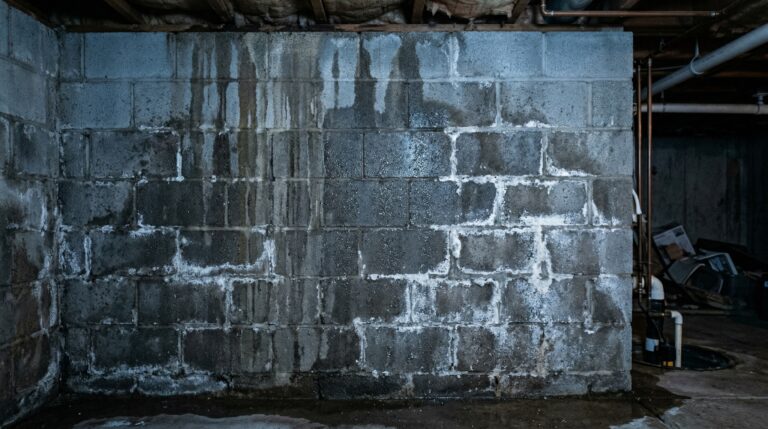
– White mineral deposits on concrete (efflorescence) — indicates water migration
– Damp spots after rain or snowmelt
– Musty smell
– Visible mold or mildew
– Water staining on the floor near walls
Address moisture issues BEFORE insulating. Insulation over a wet wall doesn’t fix the problem — it hides it while mold grows behind your new walls.
Rim Joist Insulation: Don’t Skip This
The rim joist (where the first floor framing sits on top of the foundation) is the single biggest source of heat loss and air infiltration in most basements. It’s often left uninsulated even when walls are done.
Best method: Cut rigid foam to fit between each joist bay, seal edges with spray foam. Or simply spray closed-cell foam into the entire rim joist area. Takes a professional about 2 hours for a full basement perimeter.
Cost: $500-$1,500 for the rim joist alone
Energy savings: Significant — this one area can reduce your heating bill by 5-10%
Insulation Costs for a Typical Utah Basement
For a 1,200 sqft basement (approximately 200 linear feet of wall):
| Method | Material Cost | Installed Cost |
|---|---|---|
| Fiberglass batts only | $400-$600 | $800-$1,200 |
| Rigid foam (2″) | $800-$1,200 | $1,800-$3,000 |
| Rigid foam + fiberglass | $1,000-$1,500 | $2,200-$3,600 |
| Closed-cell spray foam | $2,000-$3,000 | $3,500-$5,500 |
| Rim joist spray foam | $300-$500 | $500-$1,500 |
Common Insulation Mistakes in Utah Basements
- No rigid foam against concrete — Fiberglass alone against concrete wicks moisture and grows mold
- Poly on the wrong side — Vapor barrier goes against concrete, not against drywall
- Skipping the rim joist — Biggest bang for your buck, often forgotten
- Compressing fiberglass — R-13 batts stuffed into a narrow space lose R-value. Use the right size
- Leaving gaps — Every gap is a thermal bridge. Small gaps around pipes, wires, and corners matter
- Using the wrong foam — Open-cell spray foam absorbs moisture and shouldn’t be used against foundation walls
Energy Savings
Properly insulating a Utah basement saves $200-$600 per year on heating costs, depending on your home size, furnace efficiency, and current insulation level. The insulation typically pays for itself within 3-8 years — and you’ll feel the comfort difference immediately.
A warm floor overhead (from insulated walls below) is one of the most noticeable quality-of-life improvements from a basement finishing project.
Get It Right the First Time
Insulation is hidden behind drywall — mistakes aren’t visible until problems appear months or years later. Our team installs the right insulation system for your specific basement conditions, ensuring code compliance and long-term performance.
Get a free quote or call 801-515-3473 to discuss your project.
Ready to Start Your Basement Project?
Get a free, no-obligation quote from Utah's trusted basement finishing experts.
Get Free Quote