You are currently viewing Cost-Effective Basement Renovation Ideas for Homeowners

Cost-Effective Basement Renovation Ideas for Homeowners

If you’ve been staring at that unfinished basement and thinking, “We could really use the space,” you’re not alone. Many families along the Wasatch Front want more room without paying for a big addition. A well-planned, Cost-effective basement renovation can give you a bright family room, a smart guest suite, or a hobby zone—without breaking your budget. You know what? It starts with choices that earn their keep over time. Let me explain.


The big three: dry, safe, warm

Before any pretty finishes, take care of the fundamentals. Basements behave differently than upstairs rooms, and that matters for comfort and cost. In our climate, water, air, and heat are the three forces you plan around. Get those right, and everything else gets easier and cheaper.

Moisture first. Utah basements don’t see Florida-style humidity, but spring runoff, high water tables, and sprinkler overspray can push moisture through concrete. Seal any cracks, slope soil away from the house, and add a vapor barrier behind framed walls. A simple 6-mil poly or a dedicated membrane like Delta-FL under flooring can save future headaches. If you’ve noticed musty smells, budget for a quiet, energy-smart dehumidifier. It’s boring—but it’s gold.

Safety next. If you’re adding a bedroom, you’ll likely need an egress window that meets Utah code. That means adequate height and width and a proper window well with a ladder. It’s an upfront cost that boosts resale and gives real peace of mind. Many homes in Salt Lake County, Davis County, and Utah County also test for radon; the fix is usually a straightforward vent system. Small line item. Big safety win.

Warmth that lasts. Insulation in basements matters as much as upstairs, sometimes more. We often recommend rigid foam (XPS or EPS) against concrete walls, then framed walls with mineral wool or fiberglass. It keeps walls warmer and reduces condensation. For floors, consider insulated subfloor panels under LVP if you spend lots of time downstairs. Your feet will thank you in January.


Smart planning that saves money

Layout decisions drive cost. A few smart moves in the plan can shave thousands off your project and keep it feeling open and bright.

  • Cluster the plumbing. Keep new baths, laundry, or wet Bars near existing supply and drain lines. Shorter runs equal smaller bills.
  • Work with the mechanicals. The furnace, water heater, and main trunk lines are like a tree’s trunk—don’t fight them. We build soffits that look intentional, not like afterthoughts.
  • Borrow light. Place the family room near Windows. Use glass doors for offices and borrow daylight with interior windows or clerestory openings.
  • Plan storage on purpose. That odd bump-out under the Stairs? It’s perfect for a coat nook, holiday bins, or a shallow craft closet with pegboard. Storage solutions let you finish fewer square feet because the space actually works.

Permits and inspections aren’t just boxes to check; they protect you. They also keep appraisers happy when you sell. We handle all that for you, including drawings that meet local building codes across the Wasatch Front.


Phased Finishing: breathe easy, build smart

Not everything has to happen at once. A phased approach lets you spread costs and still enjoy the space as you go.

Phase one: framing, rough-ins (electrical, plumbing, HVAC), insulation, and drywall. You’ll lock in the layout and the big systems. It’s the backbone.

Phase two: flooring, doors, trim, and paint. This is where the space starts to feel real.

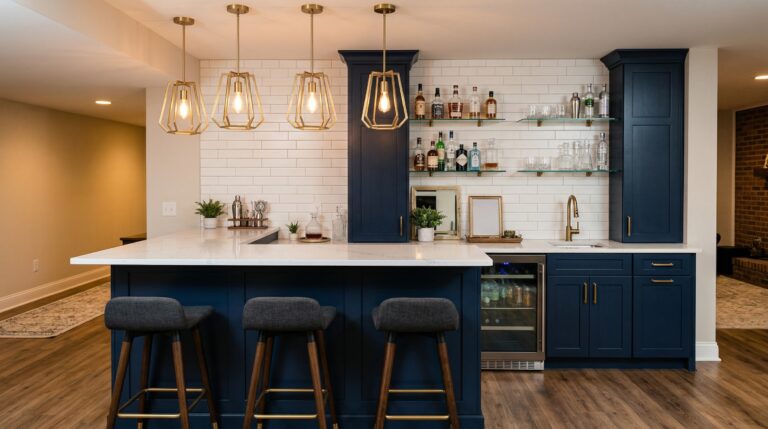
Phase three: the fun stuff—built-ins, feature walls, wet bar details, and furniture.

Honestly, we’ve seen families watch a game in a nearly completed family room while we finish the guest bath down the hall. It’s not glamorous, but it’s real life, and the savings are too.


Materials that look high-end without the price tag

You don’t need luxury everything. Pick a few upgrades where you’ll feel or see the difference, then keep the rest simple and durable.

Floors that shrug off spills

Luxury vinyl plank—think LifeProof, COREtec, or Shaw—handles kids, pets, and the occasional spill. It clicks together fast and sits well on flat concrete. For cozy areas, use a breathable carpet tile with moisture-safe backing. Area rugs warm up movie night and can be cleaned or swapped later.

Ceilings that hide the guts—and still look sharp

You’ve got choices: paint the joists black for a loft look, do drywall for a sleek finish, or use a modern drop ceiling that lets you reach pipes. Today’s tiles don’t look like office panels. We’ve used smooth 2×2 tiles with clean grid systems that feel polished.

Walls and trim that stretch the budget

On walls, a smooth drywall finish with a washable eggshell paint (Sherwin-Williams or Benjamin Moore) is plenty. Save your feature wall money for a small section with vertical shiplap, a slat wall, or a simple box trim pattern. Doors? Solid-core for Bedrooms and baths (sound matters), hollow-core for closets. It’s a neat compromise.


Light and color tricks for bright basements

Basements get a bad rap because they’re dark. Change the light and you change the mood—on a budget.

  • Use LED wafers instead of cans. They’re thin, energy-smart, and easy to place around joists. We like 3000K–3500K color temperature for warm, natural light.
  • Layer the lighting. Overhead wafers plus floor lamps for glow, plus under-cabinet strips at a wet bar or craft zone. Layers create a high-end feel with low-cost fixtures.
  • Pick paint the room loves. Light grays with a soft beige undertone or tender whites with warm depth fight the basement blues. Think BM Classic Gray or SW Alabaster for most spaces.
  • Mirrors and glass. A framed mirror in the hall or a glass panel door on the office bounces light and makes spaces feel wider.

Here’s the thing: when lighting feels balanced, even budget finishes look great. Your eyes read “finished,” not “frugal.”


Rooms that earn their keep: flexible is frugal

Every square foot should pull double duty. That’s how you save now and later.

  • Guest suite that doubles as a teen hangout. Add a closet and a pull-out sofa. A pocket door to the bath is a quiet hero—privacy without the swing space.
  • Workout room / office hybrid. Rubber tiles on half the floor, a simple standing desk, and a mirrored panel. When life changes, the room changes with you.
  • Media room with daylight. Yes, you can have both. Blackout shades for movie time, easy-open blinds for daytime. Don’t bury the windows if you don’t have to.

Thinking about a basement apartment or “mother-in-law” suite? It can be a great investment, but rules vary by city. We help you check local requirements for parking, ceiling heights, fire separation, and separate entrances across places like Draper, Bountiful, Lehi, and Orem.


DIY vs. pro: where to roll up your sleeves

Some tasks are perfect for handy homeowners. Others, not so much. Picking the right mix keeps costs in check and schedules sane.

  • DIY-friendly: painting, installing LVP, basic trim, simple shelving, and hardware. You’ll see the savings and the wins are repeatable.
  • Hire out: framing tied to structure, electrical, plumbing, HVAC changes, drywall taping, and egress windows. These affect safety, code, and comfort. It’s worth the licensed touch.

You can also split the work. We prep the space, you handle finishes, we come back for final touches. It’s a team sport.


Real-world costs along the Wasatch Front

Let’s talk numbers. Costs vary by size, finish level, and the age of your home, but here’s a helpful range for basement finishing in Salt Lake County, Davis County, and Utah County as of this year.

  • Basic finish: open family room, storage, one bath rough-in. Many projects land between $40–$65 per square foot.
  • Mid-level: add a bedroom, nicer flooring, finished bath. Often $60–$90 per square foot.
  • Higher finish: multiple bedrooms, bath with tile shower, wet bar, ceiling details. Commonly $85–$130 per square foot.

Where does the savings hide? Right here.

Cost-saving moveTypical savingsNotes
Cluster bathroom near existing drains$1,500–$4,000Shorter runs; fewer concrete cuts
LED wafers vs. traditional cans$300–$800 per roomLess labor; slimmer profile
Painted open ceiling$2–$4 per sq. ft.Modern look; easy access later
LVP instead of tile$3–$7 per sq. ft.Warmer underfoot; faster install
Feature wall vs. full-room upgrades$600–$2,000Spend where eyes land
DIY paint and trim$1,000–$5,000Sweat equity that shows

Also check for local rebates. Rocky Mountain Power sometimes offers incentives for energy-efficient lighting and smart thermostats. Those little credits sweeten the deal.


Storage, sound, and small comforts

Your future self will thank you for these quiet wins.

  • Built-ins where it counts. A 12-inch-deep cabinet run under the stairs can swallow board games, camping gear, and seasonal stuff. Shallow shelves stay tidy.
  • Soundproof the essentials. Use mineral wool (like Rockwool Safe’n’Sound) in bath and bedroom walls. Add solid-core doors and weatherstripping. Noise drops, sleep improves.
  • Quiet fans and smart vents. Bath fans with low sone ratings keep steam at bay without sounding like a jet. Return-air upgrades help the basement breathe like the rest of the home.
  • Charging and Wi‑Fi. Conduits for low-voltage lines and a central Wi‑Fi access point keep your streaming smooth. It’s a small line that pays off every day.

It sounds like overkill. It isn’t. These are the touches that make a basement feel like the favorite room, not the extra one.


Seasonal timing along the Wasatch Front

Timing affects cost and convenience more than most people expect. Spring can be busy with egress window excavations, and summer humidity spikes can slow drywall mud. Winter is great for interior work—predictable schedules, fewer delays, and contractors often have more openings. If you’re eyeing a family room for football season or a guest suite before the holidays, we’ll build a schedule that hits your milestone.

One more local tip: if your yard gets soggy during snowmelt, we like to plan exterior window wells and drainage work either before the freeze or after the big thaw. Better working conditions, cleaner results.


Where Utah Basement Finishing helps most

We’re neighbors. We live and work here, and we’ve finished basements from Sugar House to Kaysville, Sandy to Saratoga Springs. That local knowledge pays off, especially when you want a sharp finish without a wild budget.

  • Clear pricing and scope. You’ll see what’s included—no vague allowances that balloon later.
  • Value engineering. We suggest swaps that keep the look and lower the spend. Think tile where it counts, LVP where it works, and millwork that makes a wall sing.
  • Permit-ready plans. We handle drawings and inspections across Salt Lake County, Davis County, and Utah County.
  • Trade discounts. We share our pricing on fixtures and finishes from reliable brands. Simple, honest savings.

If you already have a Pinterest board, bring it. If you don’t, we’ll help you build a clear plan, from first sketch to the final coat of paint.


Frequently asked quick hits

How long does a typical finish take? Most projects run 6–12 weeks after permits. Size, complexity, and inspections drive the timeline.

Do I need an egress window for a bedroom? Yes. It’s required by code and crucial for safety. We’ll measure, design, and install it the right way.

What flooring is best for basements? LVP or engineered flooring that tolerates moisture swings. We like LVP for durability and value. Add area rugs for comfort.

Can we keep a space unfinished for storage? Absolutely. We often frame and insulate the walls around a storage zone, then install a simple door. You get energy savings and a tidy spot for totes.


A quick word on style: keep it you

Minimalist? Cozy mountain? Modern farmhouse? We’ve seen it all work downstairs. The trick is editing. Pick a clean base—calm wall color, consistent flooring—and add character with one or two focal points. A slatted wood panel behind the TV. A rich paint color in the niche by the stairs. A hit of patterned tile on a wet bar splash. Small moves, big personality.


Ready when you are

Thinking about Utah basement finishing that respects your budget and your style? Let’s sketch the plan, price it clear, and make the space you’ll actually use. Call 801-515-3473 or Request a Free Quote and we’ll help you map out a smart, cost-effective build that fits your home—and your life.

Leave a Reply