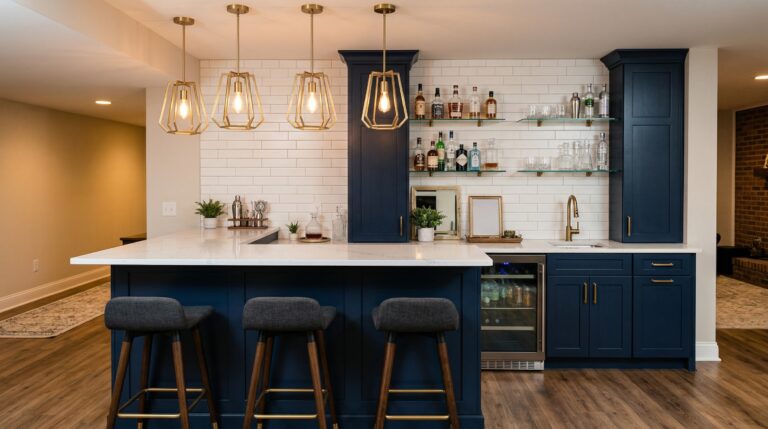
You are currently viewing DIY Basement Finishing Without Breaking the Bank

DIY Basement Finishing Without Breaking the Bank

There’s a good chance your basement is the most underused square footage in your home. And around the Wasatch Front, that space matters—more room for kids, guests, workouts, hobbies, or just a quiet corner where you actually finish a book. The good news? DIY basement Finishing doesn’t have to drain your savings. With a plan, a few smart material choices, and a clear idea of what to DIY versus what to hire out, you can build a comfortable, safe space without stress. Let me explain how homeowners in Salt Lake County, Davis County, and Utah County are doing it—step by step, without fancy fluff.


Is DIY Basement Finishing Right For You? Quick Reality Check

Honestly, a basement is one of the easiest places to add livable space. It’s close to existing utilities and already framed by concrete walls. But it’s not a slap-it-together project. You’ll need time, patience, and a willingness to learn. If you’re comfortable with a drill, a saw, and YouTube tutorials, you’re halfway there.

Here’s the thing—some tasks are perfect for homeowners: framing simple walls, laying luxury vinyl plank, painting, installing trim, and even hanging doors. Other items are usually smarter to hire out: full electrical panels, HVAC duct changes, and cutting an egress window. That doesn’t mean you can’t tackle parts of those jobs. It means you choose where DIY saves money and where pros save headaches.

In Utah, homeowner permits are available in many areas, but codes still matter. If you’re in Salt Lake County, Davis County, or Utah County, your city will outline what you can do yourself. A quick call to your building department before you swing a hammer can save you a week and a few gray hairs.


Plan First, Spend Less: Use Zones, Not Wish Lists

You don’t need a blueprint worthy of a TV reveal. You need a sketch with sizes and zones. Think: TV nook, play area, guest room, small gym, storage. Keep major plumbing and electrical where they are—moving them costs more. If you want a wet bar or bathroom, place it near existing drains.

Walk the space at night and in the morning. Where does natural light land? How low are the ducts? What squeaks from upstairs drive you nuts? These details help you decide ceiling type, lighting layout, and soundproofing later.

Budgeting That Actually Works

  • Pick a ceiling finish early. Drywall looks sleek; a modern drop ceiling gives you access. Both are right. The “wrong” choice is the one that surprises you during a leak.
  • Set a 10–15 percent cushion. You’ll discover a crooked wall or a wonky pipe. You will. Plan for it, and you won’t panic.
  • Phase the work. Do framing and insulation now; finish a bedroom and hall next month; leave the theater details for later. Phasing keeps cash flow sane.

You know what? A simple spreadsheet beats a fancy app. Track materials, permits, tool rentals, and “uh-oh” costs. Small oversights snowball. Written budgets keep you honest.


What Stuff Really Costs Around the Wasatch Front

Prices change with seasons and supply, but these ranges reflect what we see locally for a budget basement remodel where homeowners do most of the work and hire specialists for safety-critical items.

ItemDIY Cost RangeHire-Out Cost Range
Framing walls (per linear foot)$3–$6$10–$18
Rigid foam + mineral wool (per wall sq ft)$1.75–$3.50$4–$7
Drywall hang + finish (per sq ft)$0.75–$1.50$2.50–$5.00
Luxury vinyl plank (per sq ft)$2–$4 materials$4–$8 installed
Drop ceiling tiles + grid (per sq ft)$2–$3.50$4–$7
Lighting circuit + fixtures (per room)$120–$350 materials$600–$1,500
Egress window cut + wellN/A$2,000–$5,500

Not everything belongs in the DIY column. It’s okay to split the work. Have a pro tackle the egress and main electrical, and you take the rest. That balance often saves the most.


Permits And Utah Code Quirks Made Simple

Permits sound scary. They’re not. They protect your family and your home’s value. Inspectors in Salt Lake County, Davis County, and Utah County are generally helpful, especially with homeowner projects.

  • Egress for Bedrooms. Any sleeping room needs an egress window with a clear opening around 5.7 sq ft, minimum height/width clearances, and a reachable sill. Not optional.
  • Ceiling height. Target 7 feet minimum; drops for beams or ducts can be lower in small areas. Plan soffits cleanly.
  • Electrical protection. Most living areas need AFCI; Bathrooms and Bars need GFCI at outlets within 6 feet of a sink. Outlets spaced so no point on a wall is more than 6 feet from one.
  • Smoke and CO alarms. Hardwired with battery backup, interconnected; add units outside bedrooms and on each level.
  • Insulation strategy. Against concrete, use rigid foam (EPS or XPS) or closed-cell spray foam to prevent condensation. Skip interior poly sheeting. Add mineral wool or fiberglass in the stud cavity. In our dry climate, this system works.

There’s a common myth that basements need plastic vapor barriers against concrete. That traps moisture. Foam first; studs second; then cozy insulation. Different path, better result.


Moisture Is The Boss: Manage It First

Before a screw hits a stud, check for water. After a storm, look for damp spots. Tape a 2×2 foot piece of plastic to the slab overnight; if it fogs on the underside, your floor needs a moisture-smart approach.

  • Outside fixes matter. Extend downspouts, improve grading, and check sprinklers. Many “basement leaks” are sprinkler overspray on foundation.
  • Seal smart. Fill hairline cracks with polyurethane sealant. Add a sill gasket under bottom plates as a capillary break.
  • Subfloors help comfort. DriCore, Barricade, or a simple foam underlayment under LVP reduces cold and handles minor vapor.

Utah note: a lot of homes here test positive for radon. Pick up an inexpensive test from AirThings or a charcoal kit. If levels are high, a mitigation fan and sealed sump lid make a huge difference. It’s not overkill; it’s peace of mind.


Smart, Tough Materials That Stretch Your Budget

Skip “cheapest possible.” Choose “right price, long life.” It’s cheaper over time.

  • Walls. 1–2 inches of rigid foam on concrete, then 2×4 studs with mineral wool. Finish with mold-resistant drywall for baths or laundry zones.
  • Floors. Luxury vinyl plank clicks together fast, survives spills, and looks sharp. Carpet tiles in a playroom are cozy and repairable.
  • Ceilings. Drywall is clean. A modern drop ceiling gives access to valves and wires. Here’s the contradiction: drywall “feels” nicer—but when a valve leaks, you’ll wish you chose tiles. Pick your risk.
  • Lighting. LED recessed wafers are thin, bright, and easy. Use 2700–3000K for warm family areas; 4000K for gyms and craft rooms.
  • Sound control. Mineral wool in ceilings, plus a bead of acoustic caulk at drywall seams, softens footfall noise from upstairs.

Local tip: watch the ReStore in Salt Lake and Kaysville for leftover doors, cabinets, and fixtures. Utah’s remodel pace means great finds show up often.


Framing, Insulation, And Comfort: The Order That Works

Work in this sequence and the whole job feels smoother:

  1. Snap chalk lines on the slab; square your first wall with a 3-4-5 triangle.
  2. Lay foam against concrete walls; tape seams; seal edges with foam.
  3. Set pressure-treated bottom plates with a sill gasket; use Tapcons or powder-actuated fasteners.
  4. Frame 2×4 walls 16 inches on center; keep studs 1/2 inch off the foam; plumb and anchor the top plate tight to joists.
  5. Add fire blocking at 10-foot intervals and at top plate transitions using 3/4-inch plywood, mineral wool, or foam with sealant.
  6. Run wires and low-voltage before insulation; photograph walls for future reference.
  7. Insulate with mineral wool; install drywall; don’t forget the acoustic caulk bead at perimeter.

That tiny air-seal step—foam and caulk—feels fussy. It’s not. It’s what makes basements quiet and warm in January.


Electrical And HVAC: Doable, With Guardrails

Many Utah cities allow homeowners to pull their own electrical permits. If that’s not your comfort zone, have an electrician rough-in circuits and set cans; you handle trim-out and plates.

  • Circuits. Living areas on AFCI; bar or bath outlets on GFCI. Keep a dedicated circuit for a treadmill, fridge, or electronics rack.
  • Layout. Recessed wafer lights every 4–6 feet in a grid; add sconces or lamps for layers. More light beats not enough.
  • HVAC. Ensure supply and return balance. If the main system can’t handle extra load, a compact ducted mini-split or a wall unit can quietly cover the basement zone.

Pro move: add a return in each closed room. Stuffy rooms aren’t cozy; they’re a sign the air can’t circulate.


Finishes That Don’t Drain Your Wallet

Drywall finishing eats time. You can keep it clean by aiming for Level 4 on walls and a smooth Level 5 only where light hits hard, like long hallways.

  • Paint. Use a quality primer. Go eggshell for living spaces, satin in bar or bath areas. Warm whites brighten basements without feeling sterile.
  • Accent walls. Affordable panels, beadboard, or simple slat walls add texture. One wall is enough; let the rest breathe.
  • Built-ins. IKEA boxes plus a custom face frame can look bespoke for a fraction of the cost.

Don’t sleep on doors and hardware. A solid-core door with a simple black lever instantly upgrades the feel. It’s a small splurge with a big payoff.


A Realistic Weekend-By-Weekend Plan

  • Weekend 1. Moisture test, sketch layout, call building department, and gather tools.
  • Weekend 2. Foam on foundation walls; seal every seam.
  • Weekend 3. Frame main walls and soffits; mark door swings.
  • Weekend 4. Electrical rough-in and low-voltage runs; plan for future network drops.
  • Weekend 5. Insulation, fire blocking, and inspection.
  • Weekend 6. Drywall hang; rent a panel lift; invite a friend.
  • Weekend 7. Mud, sand, prime. A little patience here saves miles later.
  • Weekend 8. Flooring, trim, and paint. Then lights, doors, and a celebratory pizza.

Could you move faster? Sure. But this keeps evenings free and budgets steady.


Little Utah-Specific Curveballs To Expect

Our soils expand and contract. Minor slab hairlines are normal. Seal them and move on. Earthquakes? Strap water heaters and keep shutoff valves accessible. Winter work? Plan more drying time for joint compound and paint. Summer? Dehumidify during curing. Also, check sprinkler zones near window wells—overspray can sneak water right where you don’t want it.

And sound from upstairs? Two tricks: mineral wool in the joists and a resilient channel or clips under drywall. It’s not studio-level—but it makes conversations possible.


Common Mistakes That Waste Money

  • Framing tight to concrete. Concrete sweats. Keep the foam layer between concrete and studs.
  • Skipping egress in a “future” bedroom. If a bed might go in there, plan egress now.
  • Too few outlets and lights. You’ll add lamps and hate the cords. Wire it right from the start.
  • Carpet pad on bare slab. Feels okay at first; holds moisture later. Use a proper underlayment or subfloor.
  • No access panels. Hide valves cleanly behind a matching panel. Future-you will say thanks.

Small choices become big annoyances. The fix is almost always simple planning.


Tools That Make DIY Feel Professional

You don’t need a contractor’s trailer. A tight kit does the job:

  • Combo drill/driver set. Ryobi, Ridgid, or DeWalt get it done.
  • Oscillating multi-tool. For clean cuts around boxes, trim, and tight spots.
  • Laser level and chalk line. Straight lines save hours of cursing later.
  • Kreg pocket-hole jig. Fast, strong assemblies for built-ins.
  • Shop vac with HEPA bag. Keep dust down; your lungs will notice.

Rent specialty tools—drywall lifts, flooring rollers, or breakers for egress work. Short rental, long-term gains.


Hybrid Approach: DIY Where It Counts, Hire Where It Helps

There’s no prize for doing every task yourself. The real win is a safe, comfortable basement that fits your budget. Many homeowners ask us to handle egress Windows, rough framing, or inspections while they tackle paint, floors, and trim. That’s a smart split. It speeds things up and keeps costs reasonable.

If you’re unsure about the order, materials, or code, we can sketch a plan that you can actually follow. Sometimes a little guidance saves the most money.


Final Thoughts: You’ve Got This

A basement project feels big until you break it into weekends. Keep moisture under control, plan lighting well, choose forgiving finishes, and don’t be afraid to ask for help on the tricky parts. The payoff is huge—more space, better comfort, and a home that works harder for your family.

Need help getting started or want pricing for the parts you don’t want to DIY? Call Utah Basement Finishing at 801-515-3473, and let’s map a plan that fits your timeline and budget. Or if you’re ready now, tap here to Request a Free Quote“>Request a Free Quote and we’ll get you the numbers fast.

Leave a Reply