Basement flooring isn’t like picking flooring for your kitchen or living room. Below grade, you’re dealing with concrete slabs, potential moisture, temperature swings, and the reality that water might find its way in someday. The wrong flooring choice in a Utah basement leads to mold, warping, peeling, and expensive replacement.
We’ve installed flooring in 500+ Utah basements over 20+ years. Here’s what works, what doesn’t, and why — with honest pros, cons, and costs for each option.
- 1Why Utah Basements Need Special Flooring Consideration
- 21. Luxury Vinyl Plank (LVP) — Our #1 Recommendation
- 32. Ceramic and Porcelain Tile
- 43. Carpet
- 54. Epoxy Floor Coating
- 65. Engineered Hardwood
- 76. Polished Concrete
- 87. Rubber Flooring
- 9Flooring Comparison Chart
- 10Our Recommendation for Most Utah Basements
- 11Let Us Help You Choose
Why Utah Basements Need Special Flooring Consideration
Before we get into options, here’s what makes basement flooring different in Utah:
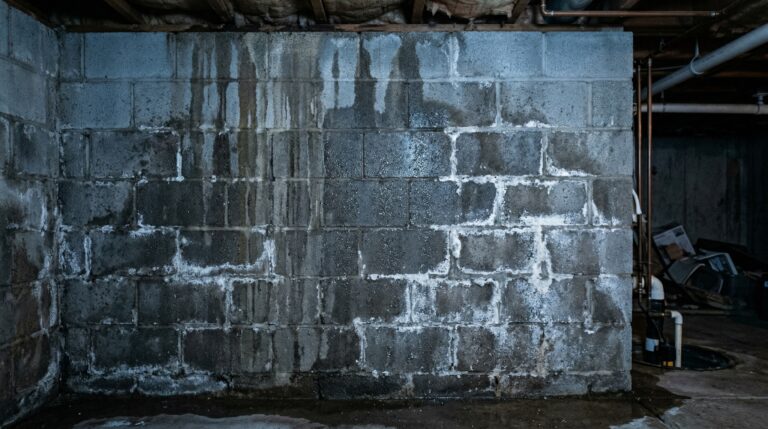
Moisture from below. Even in “dry” basements, moisture vapor migrates through concrete slabs. Utah’s soil conditions — from clay-heavy valley floors to sandy bench areas — create varying levels of vapor transmission. A moisture test is essential before choosing flooring.
Temperature swings. Utah goes from -5°F to 100°F+. Your basement stays more stable (55-70°F typically), but the concrete slab temperature fluctuates, and flooring materials expand and contract in response.
Alkalinity. Concrete is alkaline, and that alkalinity can break down adhesives over time. Flooring products need to be rated for concrete slab installation.
Occasional water events. Even the best basements can experience water intrusion from a burst pipe, water heater failure, or heavy rainstorm. Flooring that survives water events saves you thousands in replacement costs.
Pro Tip: Before installing ANY flooring, test your concrete slab for moisture. We use a calcium chloride test (measures vapor emission rate) and a relative humidity test (probes in the slab). If moisture levels are too high, we address the issue before flooring goes down. Skipping this step is the #1 cause of flooring failure in basements.
1. Luxury Vinyl Plank (LVP) — Our #1 Recommendation
Cost: $3-$7 per square foot installed
LVP is the undisputed champion of basement flooring. It’s the most popular choice in our projects by a wide margin, and for good reason.
Why LVP dominates in Utah basements:
- 100% waterproof — LVP won’t warp, swell, or grow mold when exposed to moisture. If your basement floods, you pull up the planks, dry the subfloor, and put them back down.
- Comfortable underfoot — The built-in underlayment and vinyl construction are warmer and softer than tile or concrete
- Looks like real wood — Modern LVP is remarkably realistic. Visitors won’t know it’s vinyl unless you tell them.
- Durable — Rated for heavy traffic, pet claws, and kid abuse. The wear layer resists scratches and dents.
- Easy to install — Click-lock floating installation over concrete. No adhesive needed.
- Affordable — The price-to-performance ratio is unbeatable
Thickness matters: Go with at least 5mm thick LVP with an attached underlayment. Thinner products feel cheap and don’t insulate as well. We typically install 6-8mm products.
Best brands for Utah basements: COREtec, Shaw Floorté, Mohawk RevWood, LifeProof (Home Depot’s brand is actually decent for the price)
Downsides:
– Can dent under extremely heavy point loads (piano legs, heavy furniture without pads)
– Cheap LVP (under $2/sq ft) looks and feels cheap. Don’t go bottom-shelf.
– Not as warm underfoot as carpet
Pro Tip: Install LVP as a floating floor — never glue it to basement concrete. Floating installation allows the floor to expand and contract with temperature changes and makes it removable if you ever need access to the concrete below.
2. Ceramic and Porcelain Tile
Cost: $5-$15 per square foot installed
Tile is the most durable basement flooring option and the best choice for bathrooms, kitchens, laundry areas, and any space where water is expected.
Why tile works in basements:
- Completely waterproof — Tile doesn’t care about moisture
- Extremely durable — Decades of life with zero maintenance
- Best for radiant heat — If you’re installing in-floor heating, tile is the optimal conductor
- Endless style options — Wood-look, stone-look, modern, traditional
- Easy to clean — Ideal for pet areas, mudrooms, and laundry
Porcelain vs. ceramic: For basements, always choose porcelain. It’s denser, more water-resistant (lower absorption rate), and more durable. Ceramic is fine for walls but less ideal for basement floors.
Downsides:
– Cold and hard underfoot — Without radiant heat, tile on concrete in a Utah winter is cold. Area rugs help.
– Grout maintenance — Grout lines can stain and need periodic sealing
– Higher installation cost — Tile requires a skilled installer and more labor hours
– Not forgiving on drops — Phones, glasses, and plates shatter on tile
Best applications in Utah basements: Bathroom floors, laundry rooms, mudrooms, kitchens/wet bars, and anywhere moisture is expected
3. Carpet
Cost: $2-$6 per square foot installed (carpet + pad)
Carpet is warm, soft, quiet, and budget-friendly. It’s the most comfortable basement flooring option — but it comes with caveats in below-grade applications.
Where carpet works in basements:
- Bedrooms — Warm, soft, and comfortable for sleeping
- Living/family rooms — Especially if kids will play on the floor
- Media rooms — Sound-dampening properties improve acoustics
Where carpet does NOT work in basements:
- Bathrooms or laundry areas (moisture)
- Near floor drains or sump pumps
- Basements with any history of water intrusion
Critical basement carpet rules:
- Use synthetic fiber only (nylon or polyester) — Never wool in a basement. Synthetic fibers resist moisture and mold.
- Choose low-pile — Berber or low-cut pile dries faster and hides less moisture damage
- Use moisture-barrier pad — Standard carpet pad holds water like a sponge. Basement-rated pad has a moisture barrier on the bottom.
- Never install carpet wall-to-wall in the entire basement — Combine with LVP or tile in wet areas
Downsides:
– Absorbs moisture and can grow mold if not dried quickly
– Stains more easily than hard flooring
– Shorter lifespan in basements (7-10 years vs. 15-20 upstairs)
– Harbors dust mites and allergens
Pro Tip: If you love carpet in the living area but want protection, use LVP throughout the basement and add large area rugs with moisture-resistant backing. You get the warmth and softness of carpet with the protection of waterproof flooring underneath.
4. Epoxy Floor Coating
Cost: $4-$10 per square foot professionally applied
Epoxy transforms concrete into a glossy, durable surface. It’s not just for garages — decorative epoxy with metallic or flake finishes looks stunning in basements.
Why epoxy works:
- Seamless — No grout lines, no seams, no place for moisture to hide
- Extremely durable — Resists chemicals, stains, abrasion, and impact
- Customizable — Metallic, flake, solid colors, and decorative patterns
- Easy to clean — Sweep and mop
- Bonds to concrete — No floating or shifting
Best applications:
– Home gyms (handles dropped weights)
– Workshops (chemical and stain resistant)
– Man caves and entertainment areas (metallic epoxy looks incredible)
– Utility and storage areas
– Modern/industrial aesthetic basements
Downsides:
– Hard and cold underfoot (like tile, but worse for standing)
– Requires professional surface prep (grinding, acid etching)
– Can be slippery when wet (add anti-slip aggregate)
– Cannot be installed over high-moisture concrete (adhesion failure)
– If it chips, repair is noticeable
5. Engineered Hardwood
Cost: $6-$14 per square foot installed
Engineered hardwood has a real wood veneer over a plywood or HDF core. It looks and feels like solid hardwood but handles moisture better.
Can you put hardwood in a basement? Yes — engineered, not solid. Solid hardwood will cup, buckle, and warp in a below-grade environment. Engineered hardwood’s layered construction is dimensionally stable enough for basement use, if conditions are right.
Requirements for basement engineered hardwood:
- Concrete slab moisture below 3 lbs per 1,000 sq ft (calcium chloride test) or 75% RH
- Vapor barrier underlayment between concrete and flooring
- Climate-controlled space (HVAC running year-round)
- No history of water intrusion
Downsides:
– More expensive than LVP for a similar look
– Not waterproof — standing water will damage it
– Limited refinishing (1-2 times depending on veneer thickness)
– Requires stricter moisture conditions than LVP
Pro Tip: We install engineered hardwood in premium Draper, Cottonwood Heights, and east-bench basements where homeowners want the authentic wood feel and the basement is dry and climate-controlled. For most Utah basements, LVP gives you 90% of the look at 50% of the cost and zero moisture risk.
6. Polished Concrete
Cost: $3-$8 per square foot
Your basement already has a concrete floor. Instead of covering it, polish it. Grinding, densifying, and polishing concrete creates a sleek, modern surface.
Why it works:
– Zero additional flooring material
– Industrial/modern aesthetic
– Extremely durable and maintenance-free
– Works with radiant heat
– Hypoallergenic — no fibers to trap dust
Downsides:
– Hard and cold (the hardest, coldest option)
– Cracks in the slab are visible (character or flaw, depending on your perspective)
– No sound dampening at all
– Not comfortable for extended standing or playing
Best for: Modern/industrial basements, art studios, workshops, and as a base for area rugs
7. Rubber Flooring
Cost: $2-$6 per square foot
Interlocking rubber tiles or rolled rubber sheets. The go-to for home gyms.
Why it works:
– Absorbs impact (protects concrete from dropped weights)
– Non-slip surface
– Comfortable to stand and exercise on
– Sound-dampening
– Easy to install (interlocking tiles = no adhesive)
– Waterproof
Downsides:
– Gym/commercial look (not suitable for living spaces)
– Can have a rubber smell initially
– Limited style options
Best for: Home gyms, workshops, utility areas, kids’ play areas
Flooring Comparison Chart
| Flooring | Waterproof | Warmth | Durability | Cost/sq ft | Best For |
|---|---|---|---|---|---|
| LVP | ✅ Yes | ⭐⭐⭐ | ⭐⭐⭐⭐ | $3-$7 | Everywhere |
| Porcelain Tile | ✅ Yes | ⭐ | ⭐⭐⭐⭐⭐ | $5-$15 | Wet areas |
| Carpet | ❌ No | ⭐⭐⭐⭐⭐ | ⭐⭐ | $2-$6 | Bedrooms |
| Epoxy | ✅ Yes | ⭐ | ⭐⭐⭐⭐⭐ | $4-$10 | Gyms, shops |
| Eng. Hardwood | ❌ No | ⭐⭐⭐⭐ | ⭐⭐⭐ | $6-$14 | Premium spaces |
| Polished Concrete | ✅ Yes | ⭐ | ⭐⭐⭐⭐⭐ | $3-$8 | Modern/industrial |
| Rubber | ✅ Yes | ⭐⭐⭐ | ⭐⭐⭐⭐ | $2-$6 | Gyms |
Our Recommendation for Most Utah Basements
LVP throughout as the base flooring, with tile in the bathroom and laundry area, and carpet or area rugs in bedrooms if you want softness. This combination covers all the bases — waterproof protection where you need it, comfort where you want it, and a consistent look throughout.
For home gyms, add rubber flooring over the LVP (or directly on concrete in that zone).
For premium builds with verified dry conditions, engineered hardwood is a beautiful upgrade in living areas.
Let Us Help You Choose
Every basement is different. Soil conditions, slab moisture, ceiling height, and how you plan to use the space all factor into the right flooring decision. We test, assess, and recommend — then install it right.
Call 801-515-3473 or get your free estimate.
Ready to Start Your Basement Project?
Get a free, no-obligation quote from Utah's trusted basement finishing experts.
Get Free Quote