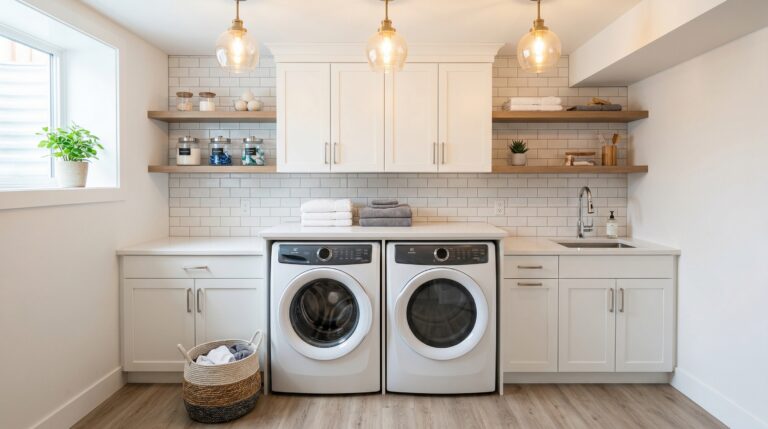
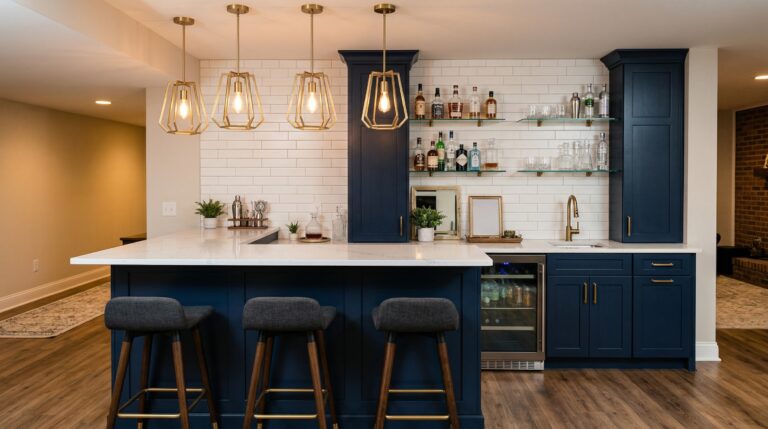
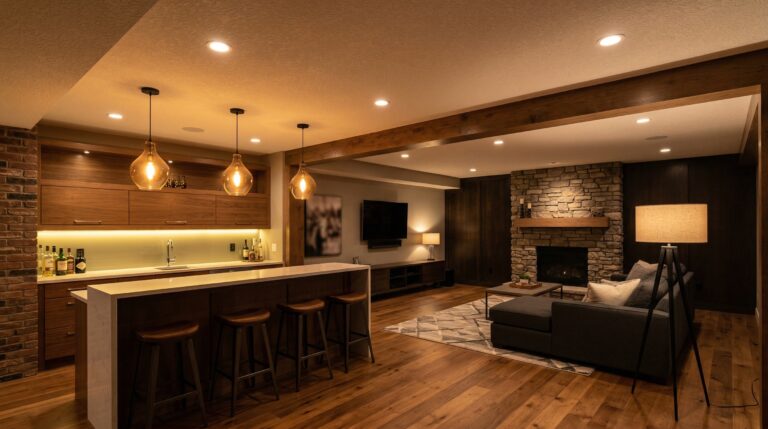
Storage is the reason most basements exist in the first place — and it’s the reason most basements are a disaster. Cardboard boxes stacked to the ceiling, holiday decorations mixed with camping gear, that treadmill you swore you’d use. Sound familiar?
Good basement storage isn’t about cramming more stuff in. It’s about systems that keep things organized, accessible, and protected from the moisture, temperature swings, and general chaos that basements are known for.
We’ve built storage solutions into 500+ basement finishes across Utah. Here are the ideas that actually work — from quick weekend projects to built-in solutions that transform your space.
Budget-Friendly Storage Solutions
1. Industrial Wire Shelving System
The workhorse of basement storage. Heavy-duty chrome or powder-coated wire shelving holds everything from bins to tools to canned goods.
Why it works in basements:
– Open wire design allows airflow (prevents moisture trapping)
– Adjustable shelf heights
– Rated for 200-800 lbs per shelf depending on gauge
– Easy to clean
Best setup: Line one full wall with 48″ wide x 18″ deep units. Use clear bins with labels on each shelf. Group by category — seasonal, tools, sports equipment, emergency supplies.
Cost: $50-$200 per shelving unit
Pro Tip: Elevate the bottom shelf 4-6 inches off the floor. If your basement ever takes on water, your stored items stay dry. It also makes sweeping under the shelves easy.
2. Ceiling-Mounted Storage Racks
The most underused space in any basement is overhead. Ceiling-mounted racks turn dead space between joists into storage for bins, lumber, and seasonal items you access once or twice a year.
Options:
– Overhead platform racks that bolt to joists ($100-$300)
– Sliding bin systems that hang from ceiling tracks ($150-$400)
– Simple joist-mounted hooks for bikes, ladders, and long items ($5-$20 each)
Best for: Holiday decorations, luggage, camping gear, seasonal clothing
Cost: $100-$400 per section
3. Pegboard Wall Organization
A pegboard wall turns vertical space into tool and equipment storage. Essential for workshops, craft rooms, and gear rooms.
Setup:
– Mount pegboard on furring strips (allows air circulation behind)
– Use a mix of hooks, bins, and shelves
– Outline tools with markers so you know what goes where (shadow board style)
Cost: $30-$100 for a 4×8 section with accessories
4. Under-Stair Storage
The space under basement stairs is almost always wasted. Convert it into pull-out drawers, shelving, or a small closet.
Options:
– Open shelving for easy access to frequently used items
– Pull-out drawers on heavy-duty slides for bins and boxes
– Enclosed closet with a door for a cleaner look
– Built-in wine rack if the space is in an entertainment area
Cost: $200-$2,000 depending on complexity
Pro Tip: Under-stair space is ideal for a safe or lockbox for valuables and documents. It’s hidden, accessible, and easy to secure.
5. Freestanding Wardrobe Cabinets
Tall, enclosed cabinets that stand against the wall. Great for storing items you want protected from dust and light.
Best for: Off-season clothing, formal wear, sports uniforms, costumes
Cost: $100-$400 per unit
Mid-Range Storage Solutions
6. Built-In Closets
Frame out a proper closet (or multiple closets) as part of your basement finish. Built-in closets with doors keep storage hidden and organized.
Ideal configurations:
– Reach-in closets (2-3 feet deep) along hallways
– Walk-in storage closets (6×6 or larger) for bulk storage
– Cedar-lined closets for off-season clothing and wool items
Cost: $500-$2,000 per closet (framing, drywall, door, shelving)
7. Dedicated Storage Room
Instead of scattering storage throughout the basement, dedicate one room entirely to organized storage. This keeps the rest of your finished basement clean and clutter-free.
Features to include:
– Floor-to-ceiling shelving on three walls
– Label system for every shelf and bin
– Proper lighting (LED shop lights)
– Dehumidifier if moisture is a concern
– Solid door that closes completely
Cost: $1,500-$5,000 (depending on size and finish level)
8. Food Storage Room
In Utah, food storage is a way of life. A properly designed food storage room in your basement keeps supplies organized, accessible, and in optimal conditions.
Design considerations:
– Temperature control — Basements naturally stay 55-65°F, ideal for canned goods and dry storage
– Deep shelving (16-24″ deep) for #10 cans and bulk items
– FIFO rotation shelving — Angled shelves that feed cans from the back (first in, first out)
– Moisture management — Sealed floor, dehumidifier, vapor barrier behind shelving
– Pest prevention — Sealed containers, tight-fitting door, clean floors
Cost: $1,000-$4,000 for a proper food storage room
Pro Tip: We build a LOT of food storage rooms in Utah basements. The number one mistake homeowners make is building shelves too deep. 18 inches is the sweet spot — deep enough for #10 cans but shallow enough to see and reach everything. Deeper shelves become black holes where food expires.
9. Mudroom/Drop Zone
If your basement has an exterior entrance (walkout or side door), create a mudroom right inside the door. Hooks, cubbies, a bench, and boot trays keep dirt, snow, and gear contained.
Essential features:
– Wall-mounted hooks for coats and bags
– Cubbies or lockers for each family member
– Bench with storage underneath for shoes
– Boot tray with drainage
– Waterproof flooring (tile or LVP)
– Overhead shelf for hats, gloves, and helmets
Cost: $800-$3,000
10. Seasonal Gear Room
Utah means four seasons of gear. Skiing in winter, hiking and biking in spring/summer, hunting in fall. A dedicated gear room beats a cluttered garage every time.
Organization systems:
– Wall-mounted ski/snowboard racks ($30-$100)
– Bike hooks suspended from ceiling or wall ($10-$30 each)
– Boot dryer station near the door ($80-$200)
– Labeled bins for season-specific items
– Rod and tackle wall mounts for fishing gear
– Backpack and hydration pack hooks
– Climate control — dehumidifier prevents mildew on gear and clothing
Cost: $500-$2,500
11. Hidden Storage Behind Walls
During a basement finish, you can build hidden storage compartments behind drywall with access panels that blend into the wall.
Ideas:
– Full-wall hidden closet behind a bookcase that swings open
– Flush access panels in drywall for storing valuables
– Recessed shelving in thicker walls (between studs)
– Hidden safe room behind a moving bookcase (yes, we’ve built these)
Cost: $500-$5,000 depending on complexity
12. Garage-Style Slatwall Panels
Slatwall panels accept a huge variety of hooks, bins, shelves, and baskets. They’re endlessly reconfigurable as your storage needs change.
Pros:
– Extremely versatile
– Clean, organized appearance
– Easy to rearrange
– Available in colors to match your space
Cost: $15-$30 per panel + accessories
Premium Storage Solutions
13. Custom Built-In Cabinetry
Floor-to-ceiling custom cabinets designed specifically for your space and storage needs. The highest-end storage solution, and it shows.
Best for: Finished basements where visible storage needs to look as good as the rest of the room
Options:
– Entertainment center with hidden storage
– Built-in bookshelves with cabinet bases
– Window seat storage benches
– Custom pantry-style cabinets
Cost: $3,000-$15,000+ depending on scope
14. Climate-Controlled Wine Storage
A dedicated wine storage area with proper temperature and humidity control.
Requirements:
– Temperature: 55°F constant (within 2 degrees)
– Humidity: 60-70%
– Insulation: R-19 minimum on all walls and ceiling
– Vapor barrier: Essential to prevent condensation
– Cooling unit: Through-wall wine cellar cooling ($500-$3,000)
– Racking: Wood or metal wine racks ($200-$5,000)
Cost: $2,000-$15,000
15. Workshop with Dust Collection
A serious workshop needs serious storage and dust management.
Features:
– Wall-mounted tool cabinets with locking doors
– Drawer systems for small parts and hardware (sort by type and size)
– Overhead lumber storage racks
– Dust collection system with pipes to each tool ($300-$1,500)
– Workbench with integrated storage — drawers, shelves, and pegboard above
– Proper electrical — dedicated 20-amp circuits for power tools
Cost: $2,000-$10,000
16. Utility Room Reorganization
Even in a finished basement, the utility area (furnace, water heater, electrical panel) needs to be accessible and organized.
Smart utility room features:
– Shelving that doesn’t block equipment access
– Labeled breaker panel
– Water shut-off valve clearly marked and accessible
– Fire extinguisher mounted on wall
– Flashlight or battery-powered light for power outages
– Tool kit for emergency repairs
Cost: $200-$800
17. Kids’ Storage System
Dedicated storage designed for kids — at their height, using their organizational logic, built to survive daily abuse.
Features:
– Open bins at kid height (no lids to fumble with)
– Picture labels for pre-readers
– Hooks at kid height for coats and bags
– Art display area (clip wires or magnetic board)
– Separate toy zones (Legos in one area, dress-up in another, art supplies in another)
Cost: $200-$1,500
18. Craft Room with Supply Organization
A crafter’s dream — dedicated storage for every type of supply.
Organization systems:
– Ribbon and wrapping paper dispensers — wall-mounted dowel systems
– Thread/yarn cubbies — clear bins organized by color
– Paper storage — flat file cabinets or vertical sorters
– Tool organization — pegboard with scissors, punches, and cutters
– Large work surface — cutting table at standing height
– Good lighting — daylight-spectrum LEDs for true color matching
Cost: $500-$3,000
19. Emergency Preparedness Station
A dedicated area for emergency supplies — first aid, flashlights, batteries, water, emergency food, weather radio, and important documents.
Design:
– Clearly labeled and organized
– Accessible without moving other stored items
– Waterproof containers for documents
– Battery-powered lighting independent of the electrical system
– 72-hour kit bags for each family member
Cost: $200-$500 (organization only, not supplies)
20. The Master Storage Plan
The most effective basement storage isn’t one system — it’s a comprehensive plan that designates every square foot.
How to create your master plan:
- Inventory everything you currently store (or plan to store) in the basement
- Categorize by frequency of access (daily, weekly, monthly, seasonal, yearly)
- Assign zones — daily-access items near stairs, seasonal items in deep storage
- Choose systems — open shelving for frequent access, enclosed cabinets for protection, overhead for rare access
- Label everything — the system only works if people use it
Pro Tip: We incorporate storage planning into every basement finish project. When we design your layout, we think about where everything goes — not just the pretty rooms, but the practical storage that makes the whole basement functional. Storage that’s planned from the start is always better than storage added as an afterthought.
Basement Storage Mistakes to Avoid
- Cardboard boxes on concrete — They wick moisture and breed mold. Use plastic bins.
- Blocking the electrical panel — It’s a code violation and a safety hazard. Always maintain 36 inches of clearance.
- Blocking the furnace — Same deal. Maintain access for maintenance and code compliance.
- Ignoring moisture — Store nothing valuable directly on concrete without a barrier. Use pallets, shelving, or moisture-resistant containers.
- No inventory system — If you can’t find it, you might as well not own it. Label everything.
Need Help Designing Your Basement Storage?
Whether you’re finishing your entire basement or just organizing the space you have, we can help. Utah Basement Finishing builds storage solutions into every project — from dedicated storage rooms to hidden closets to custom built-ins.
Call 801-515-3473 or get your free estimate.
Ready to Start Your Basement Project?
Get a free, no-obligation quote from Utah's trusted basement finishing experts.
Get Free Quote