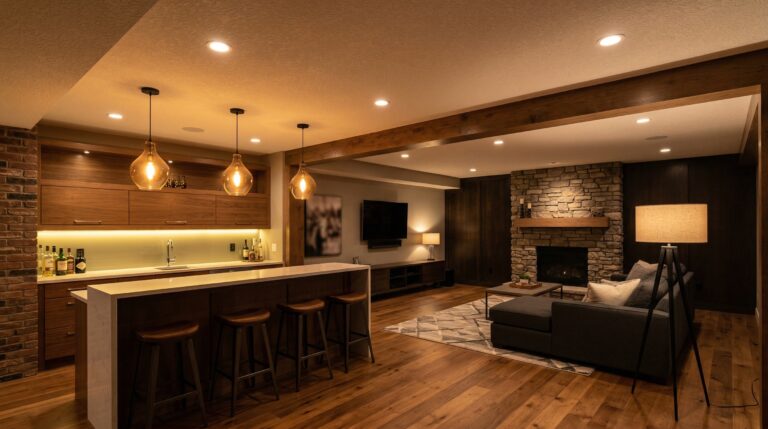
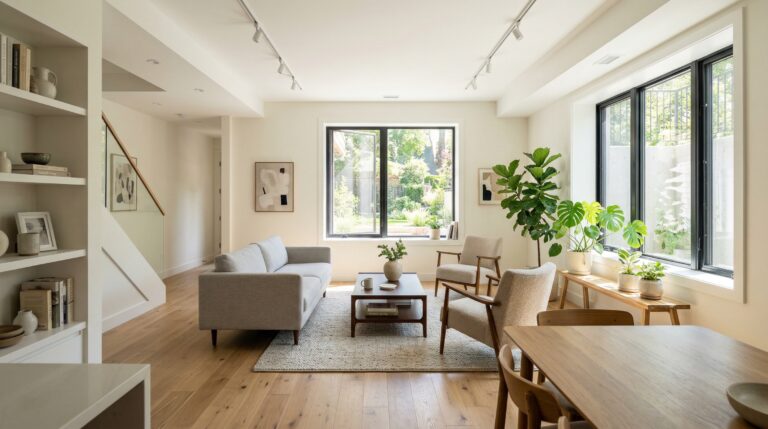
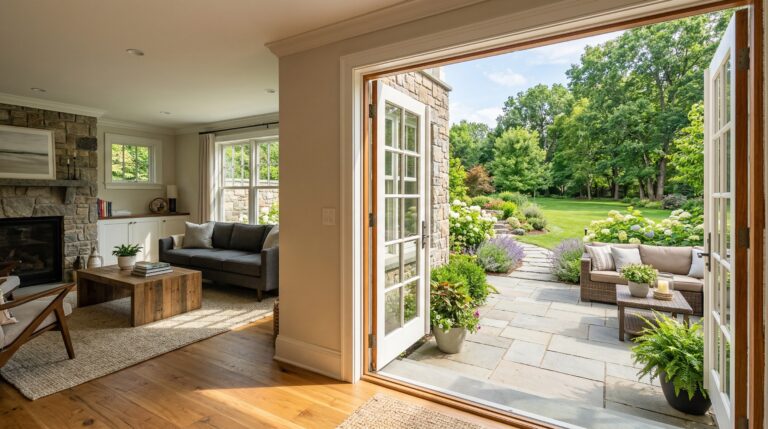
So you’ve got an unfinished basement. Concrete floors, exposed joists overhead, maybe a water heater in the corner and some boxes you haven’t opened since you moved in. Sound familiar?
Here’s the thing — your unfinished basement is either wasted space or an opportunity. And you don’t always need a full $40K renovation to make it useful. Some of these ideas work with the raw space as-is. Others are stepping stones toward a full finish. All of them are better than letting your basement collect dust.
We’ve finished 500+ basements across Utah, and many of our clients started with one of these ideas before committing to a full build-out.
Quick Wins (Minimal Investment)
1. Organized Storage System
Before you finish anything, get the chaos under control. Industrial shelving, clear bins, and zone-based organization turn a basement from a dumping ground into functional storage.
What you need:
– Heavy-duty wire or steel shelving units ($50-$150 each)
– Clear storage bins with labels
– Wall-mounted hooks for bikes, tools, and gear
– Dehumidifier if moisture is a concern ($200-$400)
Cost: $300-$1,000
Pro Tip: Create zones — holiday decorations, camping/outdoor gear, kids’ outgrown stuff, tools. When everything has a home, the basement feels 10x bigger and you can actually find things.
2. Laundry Upgrade
Your washer and dryer are already down there. Why not make the space around them functional and pleasant?
- Add a folding table or counter above front-loaders
- Install a hanging rod for air-dry items
- Bright LED shop lights overhead ($30-$50 each)
- Rubber interlocking floor mats in the laundry area ($1-$2/sq ft)
- Peel-and-stick backsplash behind machines for a finished look
Cost: $200-$800
3. Workshop Corner
Claim a section of your basement as a dedicated workspace. Even in a raw basement, a workbench and proper lighting transform a corner into a functional shop.
What you need:
– Solid workbench ($200-$500 or build your own)
– Pegboard wall for tools ($30-$80)
– Bright overhead lighting
– Power strip with surge protection
– Rubber floor mat for standing comfort
Cost: $300-$800
4. Kids’ Play Zone
Concrete floors are actually great for kids’ play areas — they’re indestructible. Add some comfort and color and let the kids claim the basement.
- Interlocking foam floor mats (colorful or neutral) — $1-$2/sq ft
- Storage cubbies or bins for toys
- A kid-sized table and chairs
- Battery-operated string lights for ambiance
- A rug for the reading corner
Cost: $200-$600
Mid-Level Upgrades (Partial Finishing)
5. Painted Concrete Floor
The single highest-impact upgrade for an unfinished basement. A painted or epoxied concrete floor instantly makes the space feel intentional.
Options:
– Concrete paint: $50-$100 for materials (DIY). Lasts 2-3 years with moderate traffic.
– Epoxy coating: $3-$7/sq ft professionally applied. Durable, glossy, and available in colors and patterns.
– Concrete stain: $2-$4/sq ft. Creates a mottled, organic look. Permanent.
Pro Tip: Prep is everything. The concrete must be clean, dry, and etched (acid-washed) for any coating to adhere properly. Skip the prep and you’ll be peeling it up in six months.
6. Painted Exposed Ceiling (The Industrial Look)
Spray the entire ceiling — joists, pipes, ducts, wires — in flat black or dark charcoal. It’s the fastest way to make an unfinished ceiling look intentional.
Cost: $1-$3/sq ft (or $100-$200 in paint for a DIY approach with a sprayer)
The exposed look works especially well when paired with:
– Edison bulb or industrial pendant lighting
– Concrete or stained floors
– Open shelving and metal furniture
7. Area Rugs Over Concrete
Not ready to commit to flooring? Large area rugs define spaces, add warmth, and make concrete livable.
- Use rugs with rubber backing (prevents moisture wicking)
- Layer multiple rugs to define zones (living area, play area, office area)
- Stick to indoor/outdoor rugs for durability and moisture resistance
Cost: $50-$300 per rug
8. Temporary Wall Partitions
Create separate “rooms” without building permanent walls. Options include:
- Curtain dividers on ceiling-mounted tracks ($50-$150)
- Bookshelf walls — tall bookcases placed perpendicular to walls ($100-$300 each)
- Folding screens — decorative room dividers ($80-$200)
- Freestanding partition walls — lightweight panels on feet ($100-$400)
Great for separating a workout area from storage, or creating a semi-private office space.
9. Basement Gym
An unfinished basement is actually ideal for a home gym. Concrete floors handle dropped weights, exposed ceilings provide height for overhead lifts, and the temperature stays cool year-round.
Essential setup:
– Rubber gym flooring over concrete ($2-$4/sq ft)
– Wall-mounted mirrors ($50-$200)
– Bright LED lighting
– Adequate electrical for treadmills/equipment
– Fan or portable AC unit for ventilation
Cost: $500-$2,000 (flooring and basics, not counting equipment)
Pro Tip: If you’re planning a serious gym, have an electrician add a dedicated 20-amp circuit for equipment. Treadmills and ellipticals pull serious power, and overloading a shared circuit is a fire risk.
10. Movie/Media Corner
You don’t need a finished home theater to watch movies in the basement. A projector on a blank wall, some beanbags or a couch, and dark-painted ceiling overhead creates a surprisingly great viewing experience.
Setup:
– Projector ($300-$800 for a solid 1080p/4K unit)
– White wall or pull-down screen ($50-$200)
– Bluetooth speaker or soundbar ($100-$300)
– Dark-painted ceiling area above viewing zone
– Comfortable seating (couch, beanbags, floor pillows)
Cost: $500-$1,500
11. Craft and Hobby Room
Dedicate a section to your creative pursuits. Sewing, painting, model building, scrapbooking — whatever your thing is, the basement gives you space to spread out.
- Large work surface (door on sawhorses works great)
- Pegboard and shelving for supplies
- Good task lighting (daylight-spectrum LEDs)
- Vinyl or tile floor section for easy cleanup
Cost: $200-$600
12. Music Practice Space
Basements are naturally sound-isolated by being underground. Even an unfinished basement is better for loud practice than any room upstairs.
- Hang moving blankets on walls for basic sound absorption ($20-$40 each)
- Rubber flooring in the practice area
- Proper electrical for amps and equipment
- A full-length mirror for monitoring form (musicians and dancers)
Cost: $200-$500
Bigger Projects (Approaching Full Finish)
13. One Finished Room
You don’t have to finish the whole basement at once. Start with one room — the most impactful one — and leave the rest for later.
Best first room to finish:
– Bedroom — Immediate daily use, adds real value, requires egress window
– Bathroom — Practical, high-value, enables other finishing later
– Family room — The biggest visual and lifestyle impact
Cost: $5,000-$15,000 for a single finished room (depending on size and scope)
Pro Tip: If you finish one room now and plan to do the rest later, we can rough-in plumbing and electrical for future rooms during the first phase. It’s much cheaper to run pipes and wires before drywall goes up.
14. Basement Apartment (Rental Income)
This is the big one. A legal basement apartment in Utah can generate $800-$1,500/month in rental income. That’s $10,000-$18,000 per year that pays for the finishing cost and then some.
Requirements for a legal apartment in most Utah cities:
– Separate entrance
– Kitchen with cooking appliances, sink, and refrigerator
– Bathroom with shower/tub
– Bedroom with egress window
– Smoke and CO detectors
– Fire separation between units (typically 1-hour rated ceiling)
– Minimum ceiling height (usually 7 feet)
– Off-street parking
Cost: $30,000-$60,000 for a full apartment build-out
15. Home Office Suite
More than a desk in a corner — a proper office with walls, a door, lighting, and climate control. Post-pandemic, a dedicated home office is practically a requirement.
- Framed walls with drywall and a solid-core door
- Dedicated electrical circuits for equipment
- Ethernet wiring (Wi-Fi through concrete and joists is unreliable)
- Good lighting — overhead plus task
- Small HVAC adjustment for comfort
Cost: $5,000-$12,000
16. Guest Bedroom with Bathroom
A private guest suite makes visiting family comfortable and keeps them out of the family’s daily routine. Requires an egress window for the bedroom.
Cost: $10,000-$25,000
17. Basement Kitchenette
A wet bar or kitchenette doesn’t require the full plumbing of an apartment kitchen. A sink, mini-fridge, microwave, and counter space create a functional entertainment prep area.
Cost: $3,000-$8,000
18. Wine Cellar or Tasting Room
Utah basements are naturally cool — perfect for wine storage. Even a small section of basement can become a proper cellar.
- Climate-controlled if storing wine long-term (cooling unit: $500-$2,000)
- Racking systems ($200-$2,000 depending on size)
- Stone or brick accent wall for character
- Proper lighting (LED, not heat-generating incandescent)
Cost: $2,000-$15,000 (simple rack room to full tasting room)
19. Indoor Garden / Grow Room
Utah’s short growing season makes indoor gardens appealing. Basements offer consistent temperatures and isolation from pests.
- Grow lights (LED panels: $100-$500)
- Shelving with waterproof trays
- Adequate ventilation
- Timer-controlled lighting
- Waterproof flooring in the grow area
Cost: $300-$2,000
20. Pet Suite
Dedicated space for your pets — dog washing station, feeding area, pet bed zone, litter box room for cats.
- Dog wash station with handheld sprayer ($500-$2,000 installed)
- Waterproof flooring (tile or LVP)
- Proper drainage
- Easy-clean walls (tile or FRP panels)
Cost: $500-$3,000
21. Seasonal Gear Room
In Utah, we have gear for every season — ski equipment, camping gear, fishing tackle, hunting equipment, mountain bikes, golf clubs. A dedicated gear room with proper storage beats a cluttered garage.
- Wall-mounted bike hooks and ski racks
- Ventilated boot dryers
- Labeled bins for seasonal rotation
- Dehumidifier to prevent mildew on gear
Cost: $500-$2,000
22. The Staged Approach
Here’s the smart play: phase your basement finish over time. Start with the highest-impact areas, get value from them immediately, and expand as budget allows.
Phase 1 (Month 1-3): Paint the floor, paint the ceiling, add lighting. ~$1,000-$3,000
Phase 2 (Month 6-12): Finish one room (bedroom or family room). ~$8,000-$15,000
Phase 3 (Year 2): Add bathroom. ~$5,000-$12,000
Phase 4 (Year 3): Complete the remaining space. ~$15,000-$30,000
Pro Tip: If you know you’ll eventually finish the whole basement, talk to us before starting Phase 1. We can advise on what to do now that will save money later — like running electrical conduit before you paint the ceiling, or stubbing plumbing before you coat the floor.
Before You Start: The Moisture Check
No matter which idea you pursue, check for moisture first. Tape a 2×2 foot piece of plastic sheeting to the concrete floor and walls. Leave it for 48-72 hours. If moisture collects under the plastic, you have a vapor issue that needs addressing before you invest in any improvements.
Common moisture solutions:
– Dehumidifier for mild humidity ($200-$400)
– Interior waterproofing paint for minor seepage ($50-$100/gallon)
– French drain system for active water intrusion ($3,000-$8,000)
– Exterior waterproofing for serious foundation moisture ($5,000-$15,000)
Let’s Talk About Your Basement
Whether you’re looking for a quick weekend upgrade or a full basement transformation, Utah Basement Finishing can help. We offer free estimates and honest advice — even if the right answer is “start with these three things and call us in a year.”
801-515-3473 or request a free estimate.
Ready to Start Your Basement Project?
Get a free, no-obligation quote from Utah's trusted basement finishing experts.
Get Free Quote