
Basement Kitchens
Kitchenettes and apartment kitchens for guest suites, ADUs, rentals, and entertainment spaces.
Basement Kitchens & Kitchenettes in Utah
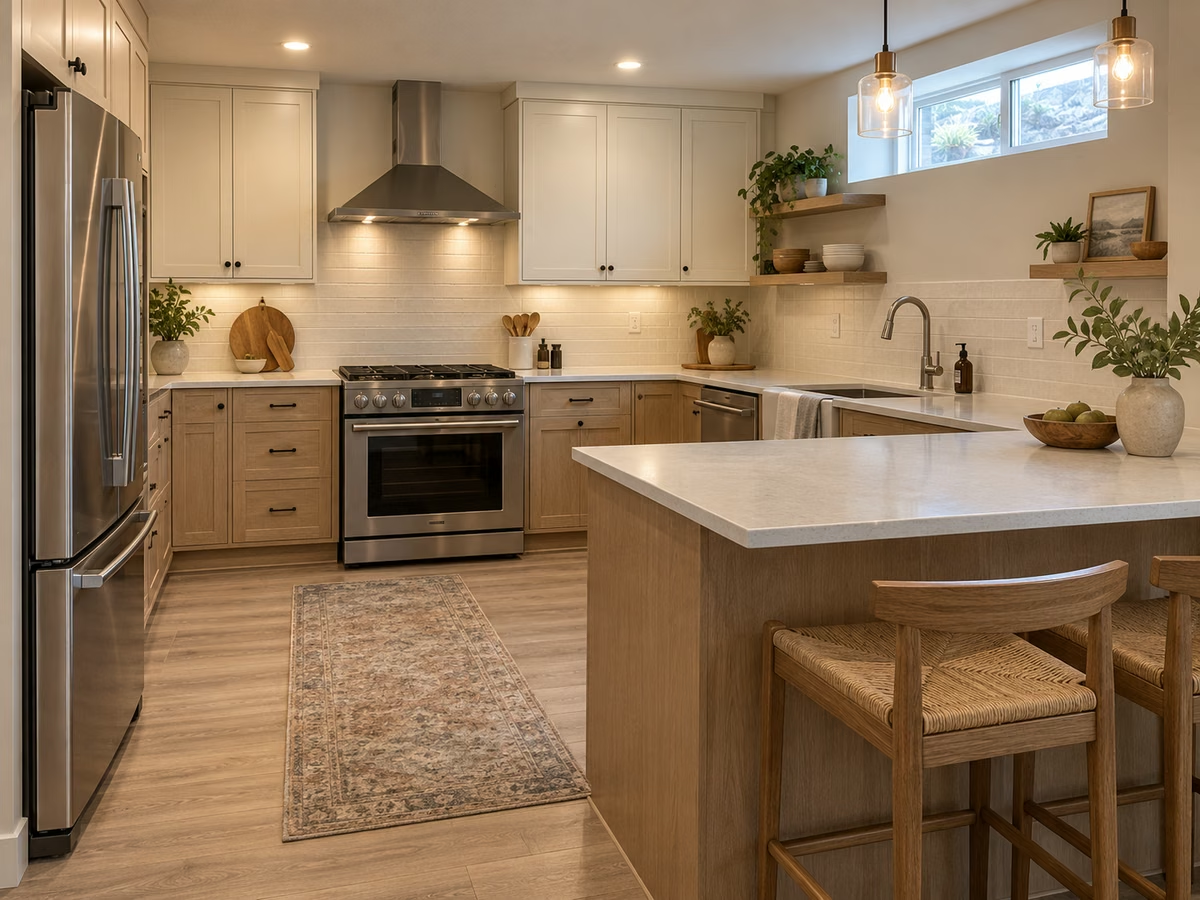
A basement kitchen makes the space work better for guests, rentals, in-law suites, and entertaining. It turns a finished basement into a self-contained living space, whether that’s a rental apartment generating monthly income, an in-law suite for aging parents, or an entertainment area where you can host without running upstairs every five minutes.
Utah Basement Finishing designs and builds basement kitchens from compact kitchenettes to full-sized cooking spaces with everything you’d find in an above-grade kitchen.
What We Offer
Kitchenettes (Compact Kitchen)
- Single-bowl sink with hot and cold water
- Under-counter refrigerator
- Microwave (countertop or built-in)
- 4-6 linear feet of base cabinetry with countertop
- Small amount of upper cabinetry or open shelving
- Dedicated 20-amp electrical circuits for appliances
- Best for: Entertainment areas, guest suites, small in-law spaces
- Typical cost: $8,000–$18,000
Full Basement Kitchens
- Full-size sink (single or double bowl) with disposal
- Full-size refrigerator
- Range or cooktop with ventilation hood (vented to exterior)
- Dishwasher
- 10-16+ linear feet of cabinetry (base and upper)
- Countertops (quartz, granite, butcher block, or laminate)
- Tile backsplash
- Pantry storage
- Island or peninsula (space permitting)
- Dedicated electrical circuits: range (240V/50A for electric, or gas line + 120V), dishwasher, disposal, refrigerator, small appliance circuits
- Best for: Rental units, ADUs, mother-in-law suites
- Typical cost: $20,000–$45,000+
Key Systems
Plumbing: Hot and cold supply lines, drain tied to basement plumbing. Sewage ejector or utility pump if drains are below the main sewer line. Gas line for gas ranges (run by licensed gas fitter).
Electrical: Basement kitchens need significant electrical capacity, typically 4-6 dedicated circuits including a 240V circuit for an electric range, 20-amp small appliance circuits along the counter, and dedicated circuits for the dishwasher, disposal, and refrigerator. All countertop outlets require GFCI protection.
Ventilation: Any cooktop or range needs a ventilation hood ducted to the exterior. In basements, we route the duct through the rim joist to the outside. Ductless recirculating hoods are an option when exterior venting isn’t practical, but they’re less effective at removing cooking odors and moisture.
Fire safety: Utah building code requires a fire separation between a basement kitchen and sleeping areas (if both exist in the basement). We install fire-rated assemblies and self-closing doors where required.
Our Process
Step 1: Needs Assessment
We determine whether you need a kitchenette or full kitchen, assess plumbing access (existing rough-ins, sewer line depth, gas availability), and evaluate electrical panel capacity. If you’re building for a rental unit, we also review local ADU regulations.
Step 2: Design and Selection
We create a kitchen layout optimized for your space, help you select cabinetry, countertops, appliances, and finishes. For ADU kitchens, we ensure the layout meets Utah’s habitability requirements for rental units.
Step 3: Construction
Plumbing and electrical rough-in first, then framing, drywall, flooring, cabinet installation, countertop templating and installation, appliance hookups, backsplash, and trim. A kitchenette takes 2-3 weeks; a full kitchen takes 3-5 weeks.
Step 4: Inspections and Completion
Plumbing, electrical, gas (if applicable), and final building inspections. We test all appliances, check for leaks, and do a detailed walkthrough.
Cost Range
| Kitchen Type | Cost Range |
|---|---|
| Kitchenette (mini fridge, microwave, sink) | $8,000–$18,000 |
| Mid-range kitchen (full appliances, stock cabinets) | $20,000–$35,000 |
| Full custom kitchen (premium everything) | $35,000–$55,000+ |
Biggest cost variables:
- Cabinetry: stock ($3,000-$6,000) vs. semi-custom ($6,000-$15,000) vs. custom ($12,000-$25,000+)
- Countertops: laminate ($500-$1,500) vs. quartz ($2,000-$5,000) vs. granite ($1,500-$4,000)
- Appliances: builder-grade package ($2,000-$4,000) vs. mid-range ($4,000-$7,000) vs. premium ($7,000-$15,000+)
- Plumbing complexity: existing rough-in saves $2,000-$4,000 vs. new slab cutting
Why Choose Us for Basement Kitchens
- ADU and rental unit expertise - we understand Utah’s regulations for habitable rental spaces and build kitchens that pass inspection
- Plumbing and electrical planning - basement kitchens are mechanically complex. We coordinate all trades cleanly
- Code compliance - proper ventilation, fire separation, electrical capacity, and gas line installation
- Design sense - a basement kitchen should feel intentional, not like an afterthought. We use the same quality materials and design principles as above-grade kitchens
- Local cabinet and countertop partnerships - we work with Utah fabricators for faster lead times and competitive pricing
Frequently Asked Questions
Do I need a permit for a basement kitchen? Yes. Kitchen installations involve plumbing, electrical, and potentially gas work, all of which require permits and inspections in Utah. If you’re building a separate dwelling unit (ADU), additional permits and inspections may apply.
Can I put a gas range in my basement? Yes, with proper installation. A licensed gas fitter runs a gas line from your existing supply, and the range must have a ventilation hood ducted to the exterior. Utah code requires adequate combustion air for gas appliances in enclosed spaces. We handle all requirements.
What if I want a kitchen for a rental apartment? We build basement kitchens for rental units regularly. Utah allows ADUs (accessory dwelling units) in many municipalities, though regulations vary by city. We help you understand local requirements, separate entrance, parking, minimum room sizes, fire separation, and build to meet them.
How do you handle the sewer connection? If your basement has a sewer rough-in at the right depth, we connect directly. If the kitchen drain sits below the main sewer line, we install a utility pump (for gray water from sinks and dishwashers) or a sewage ejector (if a toilet is also in the plumbing plan). Both are standard installations.
Will a basement kitchen smell up the whole house? Not with proper ventilation. A ducted range hood exhausting to the exterior removes cooking odors and moisture. We also ensure the HVAC system doesn’t recirculate basement kitchen air to the rest of the house, dedicated return and supply registers with damper controls keep the zones separate.
Add a kitchen to your basement. Call 801-515-3473 for a free estimate.
Related basement planning pages.
This service is usually one part of a larger basement plan. These pages help compare scope, cost, service areas, and the next estimate step.
Utah Basement Finishing Guide
See how full basement projects are planned, permitted, and built.
Basement Remodeling Utah
Compare finishing raw space with remodeling an existing basement.
Utah Basement Cost Guide
Use current planning ranges before comparing contractor bids.
Basement Cost Calculator
Get a rough budget range instantly from your square footage and scope.
Basement Finishing Near You
Find the service-area page for your city or county.
Request a Free Estimate
Send the basics and get the next step for your basement.
Common questions about basement kitchens.
Useful answers before you compare bids or request a measured basement estimate.
Do I need a permit for a basement kitchen?
Yes. Basement kitchens involve plumbing, electrical, and often ventilation or gas work, so permits and inspections are normally required in Utah.
What if I want a kitchen for a rental apartment?
A rental or ADU-style basement kitchen needs planning for local rules, fire separation, parking, egress, room sizes, utilities, and inspections. Requirements vary by city.