
Basement Apartments & ADUs
Basement apartments and ADUs planned around permits, privacy, kitchens, laundry, and egress.
Basement Apartments, ADUs & Mother-in-Law Suites in Utah
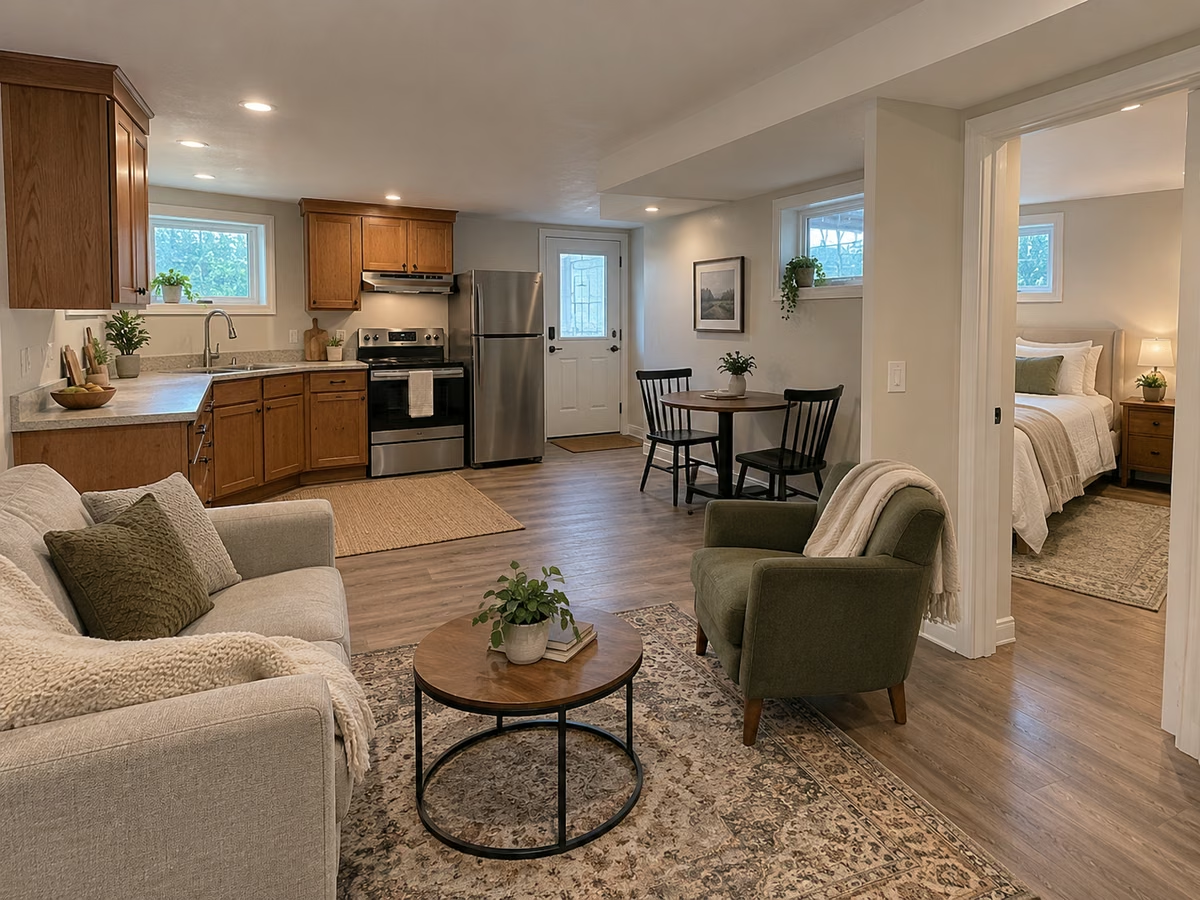
A basement apartment can add usable space and, when it is legal to rent, potential monthly income. It can also make room for aging parents, adult children saving for a home, or guests who need privacy. The details matter because legal ADUs have code, parking, entry, and permit requirements.
Utah has become more ADU-friendly in recent years. HB 82, passed in 2021, requires most municipalities to allow internal ADUs in residential zones, but each city still has its own rules.
Utah Basement Finishing designs and constructs legal, permitted basement apartments, accessory dwelling units (ADUs), and mother-in-law suites throughout Salt Lake, Utah, Davis, and Weber counties. We handle design, permits, construction, and all the regulatory navigation so you end up with a unit that’s both livable and legal.
Is a Basement ADU Worth Prioritizing?
If ADUs are part of the plan, bring them up before the general basement layout is drawn. A basement apartment changes almost every major decision: entry location, kitchen plumbing, bathroom placement, bedroom egress, laundry, sound control, fire separation, parking, electrical load, and city approval.
A smart first pass is:
- Check whether the property can support an internal ADU under city rules.
- Decide whether the unit needs a full kitchen, kitchenette, or family-only mother-in-law setup.
- Confirm bedroom count and egress window needs.
- Price the basement kitchen, bathroom, laundry, fire separation, and separate entrance before comparing the ADU to a simpler family-room finish.
- Use the Utah basement cost guide for early budget context, then get a measured feasibility estimate.
What We Offer
Full Basement Apartment / ADU
- Separate entrance - exterior door with its own address (required for legal ADUs in most municipalities). Walkout basements are ideal; for non-walkout basements, we create entrances through garage conversions or side-of-house stairwells
- Full kitchen - range/cooktop, refrigerator, sink, dishwasher, cabinetry, and countertops
- Bedroom(s) - one or two bedrooms with egress windows and closets
- Full bathroom - toilet, vanity, shower or tub/shower combo
- Living room - open-concept or defined space
- Laundry - washer/dryer hookups or stackable in-unit
- Mechanical separation - separate HVAC zone (mini-split or zoned ductwork), separate electrical sub-panel, separate water heater (or shared with metering)
- Fire separation - 1-hour fire-rated assembly between the apartment and the main dwelling (required by code). Fire-rated drywall, self-closing fire-rated door to common areas, interconnected smoke detectors
- Sound insulation - critical for both tenant comfort and your sanity. We install R-19 batts plus resilient channel in the ceiling assembly between units
Mother-in-Law Suite
Similar to a full apartment but designed for family rather than tenants:
- Connected to the main home (shared entrance is acceptable for family suites)
- Kitchenette or full kitchen depending on preference
- ADA-friendly options, wider doorways (36”), grab bars, curbless shower, lever handles, comfort-height toilet
- Emergency alert system wiring
- Intercom or doorbell connection to the main home
ADU Regulatory Navigation
- Zoning research - we verify ADU eligibility for your specific property (zone, lot size, parking requirements)
- Permit application - complete plans showing floor plan, fire separation, egress, electrical, plumbing, and HVAC
- Impact fee research - some municipalities charge impact fees for new ADU units ($2,000–$10,000+). We identify these upfront
- Utility requirements - some jurisdictions require separate utility meters or connections. We coordinate with utility providers
- Occupancy limits - Utah code limits ADU occupancy in some zones (typically to family members or a single unrelated occupant). We clarify restrictions for your municipality
- Business license - some cities require a rental business license for ADU rentals. We’ll let you know what’s needed
Our Process
Step 1: Feasibility Assessment
We check ceiling height, separate entrance options, plumbing access, electrical panel capacity, parking, and zoning rules. Not every basement can become a legal apartment, and we will tell you upfront if yours is a poor fit.
Step 2: Design and Permitting
We create a full apartment floor plan with kitchen, bathroom, bedroom(s), living area, laundry, and storage. Plans include fire separation details, egress windows, electrical load calculations, and HVAC design. We submit to the building department and manage the review process.
Step 3: Construction
Full buildout: framing, fire-rated assemblies, plumbing, electrical, HVAC, insulation, drywall, flooring, cabinets, fixtures, and exterior entry work. Timeline: 8-14 weeks depending on scope.
Step 4: Inspections and Certificate of Occupancy
Multiple inspections throughout construction (framing, fire separation, rough plumbing, rough electrical, insulation, final). After the final inspection, you receive a certificate of occupancy, the legal document that allows you to rent the unit.
Cost Range
| ADU Configuration | Cost Range |
|---|---|
| Studio apartment (no separate bedroom) | $40,000–$60,000 |
| 1-bedroom apartment | $50,000–$80,000 |
| 2-bedroom apartment | $65,000–$100,000 |
| Mother-in-law suite (connected, kitchenette) | $35,000–$60,000 |
| Mother-in-law suite (full kitchen, ADA features) | $50,000–$80,000 |
Major cost components:
- Kitchen: $10,000–$25,000 (cabinetry, countertops, appliances, plumbing)
- Bathroom: $8,000–$18,000
- Separate entrance construction: $5,000–$15,000
- Fire-rated assemblies: $3,000–$8,000
- Electrical sub-panel and wiring: $4,000–$8,000
- Mini-split HVAC: $3,000–$6,000
- Egress windows (per window): $3,500–$6,000
- Permits and impact fees: $2,000–$12,000
Return on Investment
At Utah’s current rental rates:
- 1-bedroom basement apartment: $1,200–$1,600/month rent
- Annual gross income: $14,400–$19,200
- Payback period on a $65,000 build: 3.5–4.5 years
- After payback: Net income (minus expenses) of $10,000–$15,000/year
Why Choose Us for Basement Apartments
- ADU regulatory expertise - we know which Utah cities allow ADUs, their specific requirements, and how to navigate the permitting process
- Fire separation compliance - the 1-hour fire-rated assembly between units is the most inspection-critical element. We build it right every time
- Full-service construction - kitchen, bathroom, bedroom, electrical, plumbing, HVAC, and separate entrance all handled by one contractor
- Soundproofing priority - we invest in proper acoustic separation because a noisy apartment creates problems for both the tenant and the homeowner
- Rental-ready quality - we build apartments that attract quality tenants. Good finishes, functional layouts, and professional workmanship mean fewer vacancies and maintenance calls
Utah Cities Where ADU Planning Comes Up Often
We see basement ADU and mother-in-law suite questions most often in growing Salt Lake and Utah County markets where homeowners want flexibility without moving: Salt Lake City, South Jordan, Herriman, Riverton, West Jordan, and Lehi.
Rules can change by city, so do not design the apartment from a generic checklist. We verify feasibility before treating the basement as rental-ready.
Frequently Asked Questions
Is a basement apartment legal in Utah? In most cases, yes. Utah’s HB 82 (2021) requires cities to allow internal ADUs (including basement apartments) in residential zones. However, specific requirements vary by municipality, lot size minimums, parking requirements, owner-occupancy rules, and impact fees differ from city to city. We research your specific situation before starting.
Do I need a separate entrance for a basement apartment? For a legally rentable ADU, most municipalities require a separate entrance that doesn’t pass through the main dwelling. For a mother-in-law suite occupied by family, a shared entrance is typically acceptable. We’ll clarify requirements for your city.
What’s the difference between an ADU and a mother-in-law suite? Functionally, they’re similar. Legally, an ADU is a separate dwelling unit with its own entrance, kitchen, and bathroom that can be rented to non-family members. A mother-in-law suite is typically an internal living space designed for family that may share an entrance with the main home. ADUs require more stringent fire separation, separate utilities (in some jurisdictions), and permits.
Do I have to live in the home to rent a basement apartment? Many Utah municipalities require owner-occupancy, meaning the homeowner must live in either the main house or the ADU. Some cities have relaxed this requirement. We verify the specific rules for your property.
Will building a basement apartment increase my property taxes? Potentially. Adding a legal ADU increases your home’s assessed value, which may increase property taxes. However, the rental income typically far exceeds any tax increase. Consult with your tax advisor for specifics.
Can I use my basement apartment for Airbnb/short-term rental? It depends on your city’s short-term rental regulations. Some Utah cities allow short-term rentals in ADUs with a business license; others restrict ADUs to long-term rentals only (30+ days). Salt Lake City, for example, has specific short-term rental licensing requirements. We’ll point you in the right direction for your jurisdiction.
Start generating rental income from your basement. Call 801-515-3473 for a free ADU feasibility estimate.
A family suite and a legal rental are different decisions
A basement suite can provide household privacy, a guest area or space for extended family. A separately regulated or rented unit raises additional questions. Start with who will use the space, how it connects to the rest of the home and what independence is actually needed.
Do not assume that a bedroom, bathroom and kitchenette automatically create an approved rental. Verify the proposed use, relevant zoning/building requirements and permit path with the appropriate authority. Rental income and resale outcomes are not guaranteed by the floor plan.
Think through everyday access, shared areas, sound expectations, storage and maintenance responsibilities. For an older family member, assess whether essential rooms would be more practical on the main floor. The multi-generational planning section and aging-in-place guide help organize those questions before design decisions become expensive to change.
Related basement planning pages.
This service is usually one part of a larger basement plan. These pages help compare scope, cost, service areas, and the next estimate step.
Utah Basement Finishing Guide
See how full basement projects are planned, permitted, and built.
Basement Remodeling Utah
Compare finishing raw space with remodeling an existing basement.
Utah Basement Cost Guide
Use current planning ranges before comparing contractor bids.
Basement Cost Calculator
Get a rough budget range instantly from your square footage and scope.
Basement Finishing Near You
Find the service-area page for your city or county.
Request a Free Estimate
Send the basics and get the next step for your basement.
Common questions about basement apartments & adus.
Useful answers before you compare bids or request a measured basement estimate.
Can I build a basement ADU in Utah?
Often, yes, but rules vary by city and property. Feasibility depends on zoning, entrance, parking, fire separation, bedroom egress, kitchen and bathroom layout, utilities, and permit requirements.
What makes a basement apartment legal?
A legal basement apartment or ADU typically needs a code-compliant layout, safe egress, fire separation from the main dwelling, permitted electrical and plumbing, kitchen and bathroom facilities, and approval from the local municipality.
How much does a basement ADU cost?
Many Utah basement ADU projects land around $50,000 to $100,000 depending on bedroom count, kitchen, bathroom, separate entrance, fire separation, laundry, electrical, HVAC, permits, and city requirements.